

SIX AIFlow®

SIX AIFlow brings practical intelligence into the workflows your teams use every day.

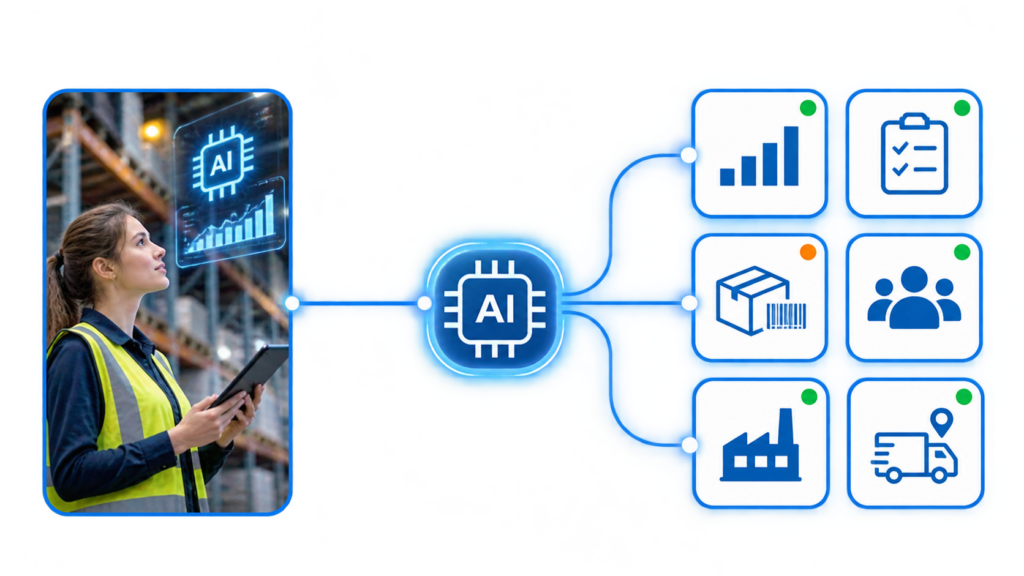
SIX AIFlow connects AI with the business information and rules inside SIX ERP. It can analyze activity, identify patterns and risks, explain results, and prepare recommendations or draft actions. Your team reviews important decisions and approves actions according to clear business rules.

Understand and prepare for the practical caveats of EPR implementation and prepare for compliance around EPR, PPWR and DPP. Achieve real-world compliance before it is too late — January 15, 2027.

Turn business data into useful intelligence

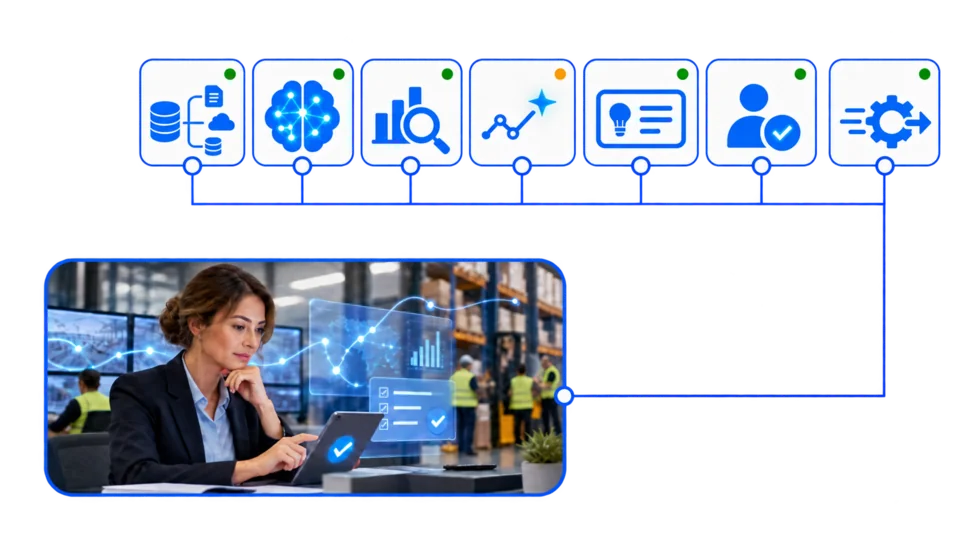
SIX ERP holds information about orders, customers, suppliers, inventory, finance, production and service. SIX AIFlow helps teams make more use of that information by surfacing patterns, highlighting exceptions and preparing answers within the workflow.

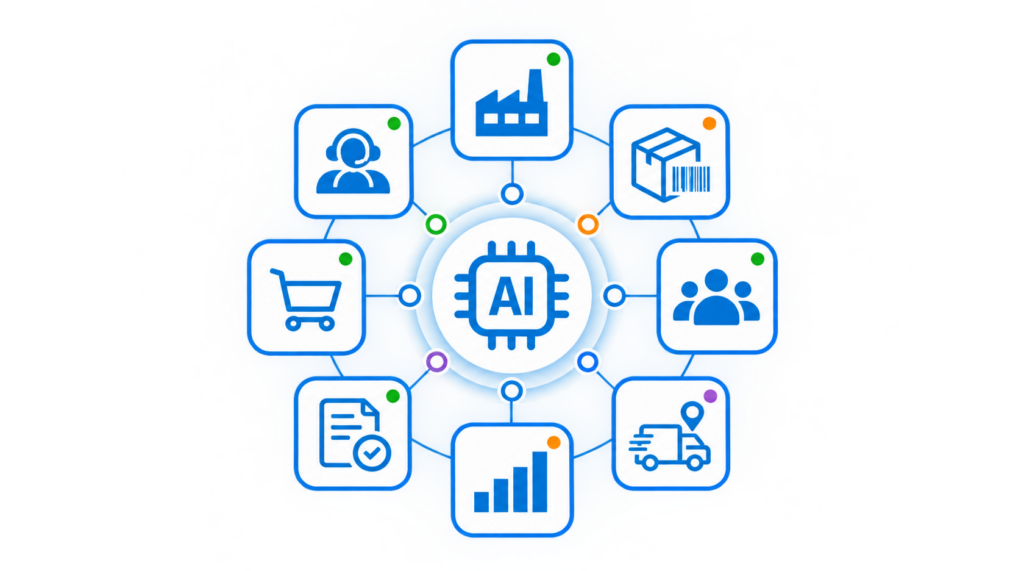
AI Flow Connected Flows

Give every team insight where work happens

Instead of searching through reports and records, employees can use AI assistance in the context of the process they are managing. AI can summarize information, compare results, flag unusual activity and help prepare a next step.

AIFlow Logo

Find changes earlier

Identify unusual costs, delayed supplier deliveries, changing demand, stock risks or other patterns that may need attention.

Understand what the numbers show

See the records and factors behind a result, so a team can investigate the cause rather than rely on a number alone.

Compare possible responses

Review potential options with their expected cost, timing, benefit and risk before deciding what to do.

Prepare work for review

Use AI to draft documents, summarize activity, organize information or prepare a transaction for an authorized employee to check.

How it works

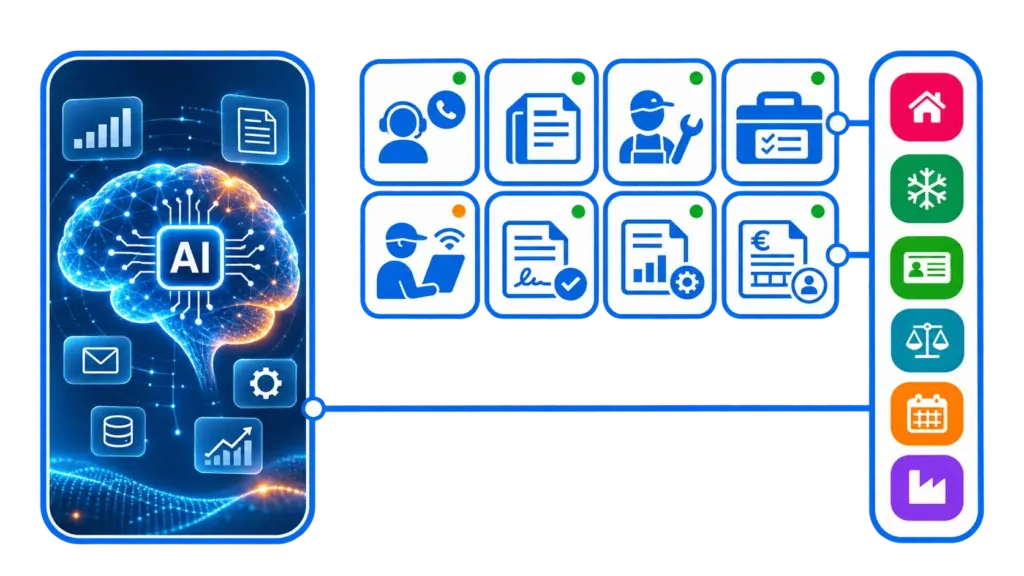
SIX AIFlow connects artificial intelligence with every business process across SIX ERP, turning information into useful insights, recommendations, and actions. It processes incoming emails, scans documents, extracts data from supplier invoices, and helps prepare customer proposals, reports, and business correspondence. AIFlow evaluates operational information, summarizes projects, identifies exceptions, and provides recommendations based on connected ERP data. By interacting with CustomerFlow, SalesFlow, PurchaseFlow, StockFlow, ManufacturingFlow, ServiceFlow, PeopleFlow, ProjectFlow, and FinanceFlow, it can recognize patterns, highlight risks, and assist employees with everyday decisions. AIFlow can also incorporate relevant external information to support more informed analysis. Suggested actions remain subject to user permissions, defined workflows, and human approval where required. The result is an intelligent assistant working across the entire organization, reducing repetitive tasks, improving information quality, and helping employees make faster, better-informed decisions without losing control over business processes.

Keep people in control of decisions

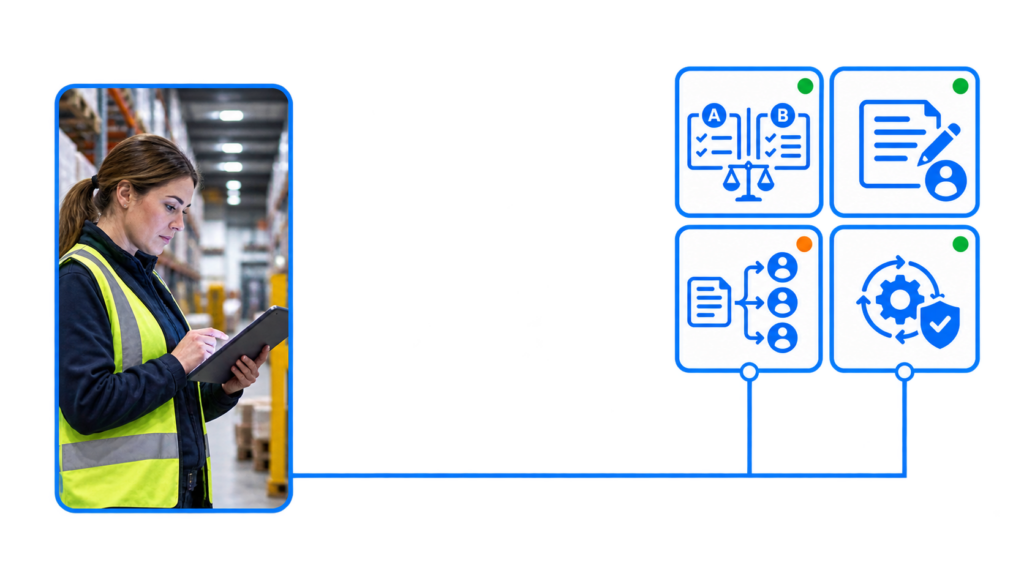
AI can process information quickly, but it does not have the full context of your business. Employees bring experience, relationships, priorities and knowledge that may not be recorded in ERP data. SIX AIFlow is designed to support that judgment, not remove it.

Recommendations should be clear, reviewable and accountable

Before an AI-supported action is applied, the responsible person should be able to understand what the system considered, what it recommends and where uncertainty remains.

  • Role-based access: AI assistance follows the user’s permissions and access to business information.
  • Risk-based approvals: Approval steps can reflect the value, impact and reversibility of an action.
  • Explainable recommendations: Show relevant data, assumptions and reasons behind a suggestion.
  • Traceable actions: Keep records of recommendations, reviews, approvals, changes and exceptions.

The harder an action is to reverse, the more human review it should receive.

Analyze. Recommend. Approve. Act with confidence.

SIX AIFlow supports different levels of assistance, from answering a question to preparing an action for approval. The level of automation should match the business risk, company policy and quality of available data.

Monitor business patterns

Analyze relevant business activity to help teams notice changes in costs, demand, stock, delivery performance or process results.

Explain exceptions

Summarize unusual transactions or results and point users to the records that may help them investigate.

Forecast what may need attention

Use available data to highlight possible changes in demand, cash flow, supplier reliability, replenishment needs or production capacity.

Show uncertainty and missing information

Flag incomplete, conflicting or outdated data instead of presenting an uncertain result as a fact.

Compare options before acting

Prepare possible responses and show expected effects on cost, timing, service levels, inventory or capacity.

Create drafts for review

Prepare a proposal, supplier message, purchase-order draft, invoice record or other work item for an authorized employee to review.

Route decisions to the right person

Use approval rules to send decisions to the manager or specialist responsible for the process.

Automate within defined limits

Routine, low-risk actions may be automated when the business has approved the rules, thresholds and safeguards. Higher-impact actions remain subject to the required review.

FinanceFlow

Support invoice and expense processing, payment matching, cash-flow analysis and financial exception review.

SalesFlow and CustomerFlow

Help prepare proposals and customer communications, summarize activity and highlight follow-up opportunities.

PurchaseFlow and StockFlow

Analyze demand, stock and supplier information to flag replenishment needs, delivery risks or unusual inventory movements.

ManufacturingFlow and ServiceFlow

Help teams examine material, capacity, work-order and service information, then prepare options for planners or managers to review.

Connect AI with the full context of your business

An AI result is only useful when it reflects the process around it. SIX AIFlow works with connected ERP information and business rules, helping teams consider how one action may affect other departments.

One connected view. Clear responsibility for decisions.

A purchasing recommendation may affect stock, production, customer delivery dates and cash flow. A proposal may depend on approved prices, product details and delivery terms. SIX AIFlow can help bring those details into the review, while the relevant employee remains responsible for the decision.

  • Connect insights to the customer, transaction or business record being reviewed.
  • Use relevant data from connected SIX Flows, subject to access permissions.
  • Keep recommendations and approvals linked to the underlying process.
  • Make handoffs between teams visible and traceable.

Put AI to work where it can help

Every business has different data, approval rules and decision responsibilities. Talk with a SIX expert about one process where AI could reduce manual work, improve visibility or help your team act sooner—with controls suited to the decisions involved.

See other SIX ERP Resources

Best Field Service ERP Software for Mobile Technicians: How to Choose

Compare the best field service ERP for mobile technicians: what to check in scheduling, parts, approvals and invoicing, and how to trace one job end to end.


Read More >

A successful ERP data migration requires more than transferring records between systems. Learn how to plan migration scope, clean and validate data, map business processes, run test migrations, and manage cutover without disrupting daily operations. Discover practical steps to reduce migration risks, protect data integrity, and ensure a reliable ERP go-live.

Read More >

Learn how supplier performance scorecards turn purchasing, delivery, and quality data into better decisions. Explore key KPIs, weighted scoring, performance thresholds, and how connected ERP systems help reduce supplier risks, prevent production delays, and control purchasing costs.

Read More >
The Right ERP System Doesn't Always Come from the Biggest Vendor

Why in-depth business analysis, personal attention, and long-term partnership can matter more than a globally recognized brand.
Read More >

Industries

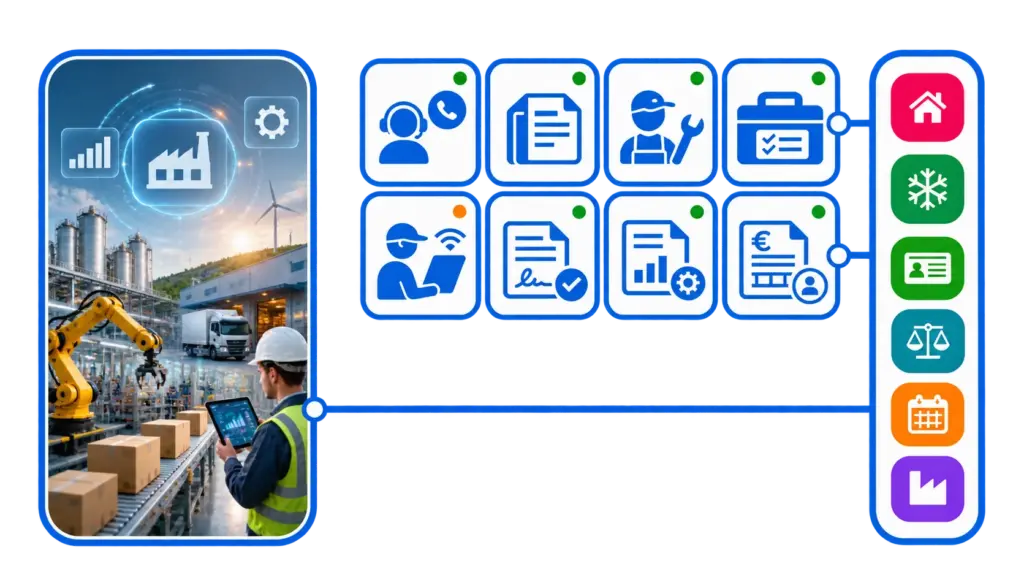
SIX AIFlow brings intelligent automation and AI-powered assistance to businesses across virtually every industry. From processing emails, extracting invoice data, and preparing proposals to evaluating projects, analyzing operational performance, and identifying business risks, AIFlow connects artificial intelligence with everyday business activities. By working across CustomerFlow, SalesFlow, ManufacturingFlow, StockFlow, PurchaseFlow, ServiceFlow, PeopleFlow, ProjectFlow, and FinanceFlow, it helps organizations reduce repetitive tasks, improve decision-making, and turn connected business data into actionable insights. Whether managing complex manufacturing operations or delivering professional services, SIX AIFlow adapts to different workflows while keeping employees in control of important decisions.

AI by Industry

And many more industries, including furniture manufacturing, chemicals, electronics, energy, utilities, hospitality, real estate, education, packaging, textiles, printing, and organizations managing complex projects, documents, customer relationships, and operational workflows.

Industries We Serve

Manufacturing & Industrial Production

Wholesale Distribution & Trading

Food, Beverage & Agriculture

Retail, E-Commerce & Consumer Goods

Automotive, Machinery & Equipment

Healthcare, Medical Devices & Pharma

Construction & Engineering

Logistics, Transport & Supply Chain

Financial & Accounting Services

Field Services & Technical Maintenance
Resources

Start with a business problem—not an AI feature

Choose a process where the team spends too much time searching, checking or re-entering information. Define the current baseline, identify the data and approvals involved, then test AI in a focused workflow. Measure the result and refine the controls before extending it to other areas.

Frequently Asked Questions

Solutions AIFlow Frequently Asked Questions

  • What is SIX AIFlow?

    SIX AIFlow is the AI capability within SIX ERP. It brings analysis, assistance and recommendations into business workflows, using relevant ERP information and rules to help employees understand activity and prepare next steps.

  • Where does AIFlow run, and is our data used to train AI models?

    No, AIFlow runs on isolated and purpose driven frontier models and no data is shared beyond your personal pod.

  • Is AIFlow suitable for a small or mid-sized company, and what should we start with?

    Yes. Pick one process with a measurable problem, for example supplier invoice entry, replenishment alerts or proposal drafting, and agree the approval rules first. You can book a conversation with a SIX specialist at to choose the process where AI would save the most manual work.

  • How is AIFlow different from a general-purpose AI chatbot?

    A general chatbot has no knowledge of your orders, stock, suppliers or approval rules. AIFlow works inside SIX ERP with connected data from your Flows, respects user permissions, and keeps every recommendation, review and approval traceable to the transaction it concerns. Employees get the assistance in the process they are already working in.

  • Does AIFlow use data from outside the ERP?

    AIFlow can incorporate relevant external information to support more informed analysis. Everything it uses to support a recommendation is shown as part of the explanation, and access to business information still follows each user’s role-based permissions.

  • How do approvals work for AI-supported actions?

    Approval steps reflect the value, impact and reversibility of an action. Routine, low-risk actions can be automated within thresholds you define and approve. Higher-impact actions go to the manager or specialist responsible for the process, and the recommendation, review and approval stay linked to the underlying record.

  • Does SIX AIFlow replace employees?

    No. AIFlow reduces repetitive work, improves information quality and prepares decisions faster, but employees bring context that is not in the ERP data: experience, relationships and priorities. People stay responsible for business decisions, and the harder an action is to reverse, the more human review it receives.

  • Can AIFlow forecast demand or cash flow?

    AIFlow uses available ERP data to highlight possible changes in demand, cash flow, supplier reliability, replenishment needs and production capacity. These are indicators of what may need attention, not guarantees. Where data is incomplete, outdated or conflicting, AIFlow shows the uncertainty instead of presenting a result as fact.

  • How does AIFlow support manufacturing and service planning?

    In ManufacturingFlow and ServiceFlow, AIFlow helps planners and managers examine material, capacity, work-order and service information. It then prepares options that show expected effects on cost, timing, service levels and capacity, and the planner chooses.

  • How does AIFlow help with purchasing, stock and replenishment?

    AIFlow analyzes demand, stock and supplier information across PurchaseFlow and StockFlow. It can flag replenishment needs, supplier delivery risks and unusual inventory movements, and prepare a purchase-order draft for an authorized employee to approve.

  • How can AIFlow help my finance team?

    Within FinanceFlow, AIFlow supports invoice and expense processing, payment matching, cash-flow analysis and the review of financial exceptions. It explains unusual transactions and points users to the records behind them, so the team investigates the cause instead of relying on a number alone.

  • Can SIX AIFlow help write customer proposals and follow-ups?

    Yes. Together with SalesFlow and CustomerFlow, AIFlow can draft proposals and customer messages, summarize customer activity and highlight follow-up opportunities. A salesperson reviews and sends the final version, and approved prices, product details and delivery terms come from ERP data.

  • Can SIX AIFlow extract data from supplier invoices?

    Yes. AIFlow can read supplier invoices and extract their data, and FinanceFlow and PurchaseFlow can use that data to prepare the invoice record for review. Where the data is incomplete or does not match the order or receipt, AIFlow flags it for a person to check instead of passing it through. Invoices received via email have an automated flow to match supplier invoices and record those, and no scanning is involved in this automated AI Flow.

  • What can SIX AIFlow do with emails and documents?

    SIX AIFlow can process incoming emails, scan documents and extract the relevant data into the right ERP record. It can also help prepare customer proposals, reports and business correspondence. Employees review the result before anything is applied, according to your approval rules.

  • Does AIFlow make business decisions by itself?

    AIFlow can analyze information, explain patterns, recommend options and prepare draft actions. People remain responsible for business decisions. Any automation should follow defined permissions, thresholds and approval rules.

  • Can AIFlow perform actions automatically?

    Routine, low-risk actions may be automated when the business has defined and approved the rules. Actions with significant financial, operational, legal or customer impact require appropriate human approval.

  • How does AIFlow explain its recommendations?

    A recommendation shows the relevant data and factors behind it, describes its expected effect and identifies uncertainty or missing information where possible. This gives the responsible employee a basis to review or challenge the suggestion.

  • Does AIFlow respect user permissions?

    AI assistance follows the user’s role-based access rights. A user should only receive information and AI-supported actions permitted for their responsibilities.

  • Which business workflows can use AIFlow?

    AI can support workflows across FinanceFlow, SalesFlow, CustomerFlow, PurchaseFlow, StockFlow, ManufacturingFlow and ServiceFlow. The suitable use cases depend on the process, available data, integrations and approval requirements.

  • How should a company start using AIFlow?

    Start with a specific process and a measurable business problem. Establish a baseline, review the data and risks, define approval rules, then pilot the use case with the people who perform the work. Expand after evaluating the results and exceptions.

  • What happens when AIFlow finds incomplete or conflicting data?

    SIX AIFlow flags the issue, explains what information is missing or inconsistent, and requests review where needed. It does not treat uncertain information as a reliable basis for high-impact actions.

  • How are AI-supported actions recorded?

    The workflow can retain relevant records of the data used, recommendation, review, approval, final action and exceptions. The exact audit scope should be configured to the process and your governance requirements.