Home » Services » Consulting & Pre-Integration Support
Consulting & Pre-Integration Support
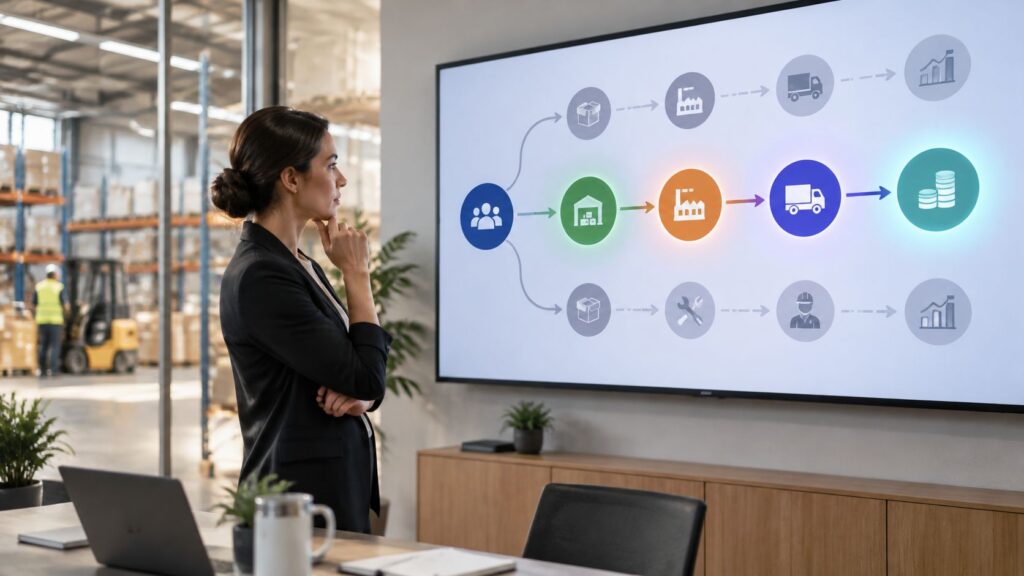
One gated transformation path from start to end.
A successful ERP implementation starts long before the software is configured. SIX works with your team to understand existing workflows, identify process gaps, assess data and integration requirements, and define a practical implementation roadmap. This early preparation reduces risk, prevents costly surprises, and ensures the final solution supports both your daily operations and long-term growth.
Understand and prepare for the practical caveats of EPR implementation and prepare for compliance around EPR, PPWR and DPP. Achieve real-world compliance before it is too late — January 15, 2027.
Registration opens soon
Start with clarity. Implement with confidence.
Your ERP project should not begin with assumptions, unclear requirements, or overlooked dependencies. SIX works closely with your team to map real processes, identify gaps, assess data and integration needs, and build a practical roadmap for a successful implementation.
Turn business needs into a clear ERP roadmap
Together, we translate your goals into defined workflows, system requirements, integration points, data priorities, and project phases. This gives every stakeholder a shared plan, reduces implementation delays, and ensures the final solution reflects how your business actually works.
See your processes clearly
Map how work moves across teams, systems, and locations. We identify bottlenecks, duplicated effort, and missing connections before they become implementation problems.
Define the right solution
Translate business goals into clear workflows, functions, roles, and priorities—so every stakeholder understands what SIX ERP must support and deliver.
Prepare data and integrations
Assess existing data, migration requirements, connected systems, and technical dependencies early to reduce disruption, prevent rework, and protect business continuity.
Move forward with a clear plan
Establish project phases, responsibilities, timelines, risks, and success measures, giving your team a realistic roadmap from initial preparation through implementation.
Transformation succeeds when people move together
Technology can enable change, but visible leadership, clear communication, and early employee involvement turn a new system into a better way of working.
Lead the change. Bring everyone on board.
SIX helps management guide the transformation from initial planning through training and go-live. By involving key users early, explaining what will change and why, and responding openly to concerns, teams gain confidence instead of resisting the process. Strong leadership creates ownership, accelerates adoption, and makes the transition to the new system significantly smoother.
A successful ERP transformation begins with understanding the business, preparing the technical foundation, and bringing people confidently into the new way of working.
See how work really happens
Map workflows, responsibilities, decisions, and information across teams to understand how the business operates today.
Find gaps and bottlenecks
Identify delays, duplicated effort, manual work, missing controls, and disconnected data that limit performance or create unnecessary risk.
Define the right requirements
Turn business goals into clear functional, reporting, compliance, and integration requirements—prioritized around real operational value.
Align priorities and success measures
Create agreement between management, key users, and project teams on scope, expectations, and what the transformation should deliver.
Prepare your data
Review data quality, ownership, structure, and migration requirements so reliable information enters the new system from the beginning.
Map systems and connections
Document existing applications, interfaces, devices, and data exchanges to define what must be connected, replaced, or retired.
Design future workflows
Translate approved requirements into practical processes, roles, permissions, and control points ready for configuration in SIX ERP.
Build a realistic implementation plan
Set phases, responsibilities, dependencies, timelines, and risk controls, giving everyone a clear route from preparation to go-live.
Lead from the top
Visible management support gives the project direction, resolves uncertainty, and shows teams that the new way of working matters.
Explain the reason for change
Communicate what will change, why it is needed, and how it will improve everyday work, decisions, and collaboration.
Bring people on board early
Involve key users in design, testing, and training so knowledge grows early and employees feel part of the solution.
Turn adoption into lasting progress
Support teams through go-live, gather feedback, and improve continuously so SIX ERP becomes part of everyday work—not an imposed tool.
See other SIX ERP Resources
Choosing the best ERP for distributors means looking beyond accounting. Compare the capabilities that connect sales, purchasing, inventory, warehouse operations, order fulfilment, and finance—and learn how to assess the right fit for your distribution business.
Learn how to classify departments as cost centers or profit centers based on the decisions their managers control. This guide explains how to track revenue, costs, internal charges, shared expenses, and ERP reporting without distorting performance.
Learn how managed cloud ERP compares with SaaS and self-hosted systems. Explore costs, responsibilities, security, maintenance, and flexibility to decide whether a provider-managed ERP is right for your growing business.
Explore 11 Odoo alternatives for connecting sales, finance, inventory, manufacturing, and service operations. Compare ERP platforms by workflow fit, integration, flexibility, implementation effort, and total cost to find the right solution for your business.
Tell us where you are in your ERP journey—planning, implementation, or ongoing support. Our consultants will help you identify the right service path and explain what the next stage should involve.
Services Pre-integration and Consulting Frequently Asked Questions
What is SIX Consulting & Pre-Integration Support?
It is the preparation phase of an ERP project, carried out before SIX ERP is configured. SIX works with your team to understand existing workflows, identify process gaps, assess data and integration requirements, and define a practical implementation roadmap. The aim is to reduce risk, prevent costly surprises, and make sure the final solution supports both your daily operations and long-term growth.
What are the three stages of the SIX consulting approach?
The approach has three stages: Analysis, Pre-Integration, and Transformation. Analysis maps how work happens today and defines requirements. Pre-Integration prepares data, maps systems and connections, designs future workflows, and builds the implementation plan. Transformation brings people on board through leadership, communication, early involvement, and support through go-live.
What happens during the Analysis stage?
SIX maps workflows, responsibilities, decisions, and information across teams to understand how the business operates today. It then identifies delays, duplicated effort, manual work, missing controls, and disconnected data. Business goals are turned into functional, reporting, compliance, and integration requirements, prioritized around real operational value. Management, key users, and project teams then agree on scope, expectations, and what the transformation should deliver.
How does SIX turn business needs into an ERP roadmap?
Together with your team, SIX translates your goals into defined workflows, system requirements, integration points, data priorities, and project phases. This gives every stakeholder a shared plan, reduces implementation delays, and helps ensure the final solution reflects how your business actually works.
How does SIX prepare our data before implementation?
SIX reviews data quality, ownership, structure, and migration requirements so that reliable information enters the new system from the beginning. Existing data, migration requirements, connected systems, and technical dependencies are assessed early to reduce disruption, prevent rework, and protect business continuity.
How does SIX handle our existing systems and integrations?
SIX documents your existing applications, interfaces, devices, and data exchanges. This defines what must be connected, replaced, or retired, so integration needs are known before configuration starts.
What does SIX deliver before configuration begins?
SIX translates approved requirements into practical processes, roles, permissions, and control points that are ready for configuration in SIX ERP. It also builds an implementation plan that sets phases, responsibilities, dependencies, timelines, risks, and success measures, giving everyone a clear route from preparation to go-live.
Who from our company should be involved in pre-integration?
Pre-integration involves your team and every stakeholder in the ERP project. Management gives the project direction, and key users take part in design, testing, and training. Agreement between management, key users, and project teams on scope, expectations, and deliverables is part of the Analysis stage.
Can we use consulting and pre-integration if we are still at the planning stage?
Yes. SIX asks you to tell it where you are in your ERP journey: planning, implementation, or ongoing support. Its consultants then help you identify the right service path and explain what the next stage should involve.
How do we start with SIX consulting and pre-integration?
Book a conversation with a SIX expert through the “Talk to an Expert” or “Plan your next step” buttons on this page. Both lead to the SIX appointment booking page.
What is included in SIX consulting and pre-integration?
We examine your existing workflows, systems, data, responsibilities, and business requirements. The result is a clear view of what should change, what must be connected, and how the implementation should be structured.
Why should pre-integration happen before system configuration?
Pre-integration replaces assumptions with verified requirements. It identifies risks, dependencies, data issues, and integration needs early—reducing rework, controlling costs, and creating a smoother path to go-live.
Why is leadership important during an ERP transformation?
An ERP transformation affects responsibilities, decisions, and everyday routines across the business. Visible leadership provides direction, resolves uncertainty, reinforces priorities, and helps employees understand why the change matters.
How does SIX help employees adopt the new system?
We involve key users early in process design, testing, and preparation. Clear communication, role-based training, feedback, and go-live support build confidence, reduce resistance, and make the new system part of everyday work faster.