SIX PeopleFlow®

People, performance and workforce management—connected.

SIX PeopleFlow connects employee records, working time, attendance, leave, skills, performance and everyday HR processes in one organized system. Give employees, managers and HR teams reliable information, simpler workflows and the visibility they need to support people, strengthen compliance and help the business grow.

Understand and prepare for the practical caveats of EPR implementation and prepare for compliance around EPR, PPWR and DPP. Achieve real-world compliance before it is too late — January 15, 2027.

Every employee. One connected journey.

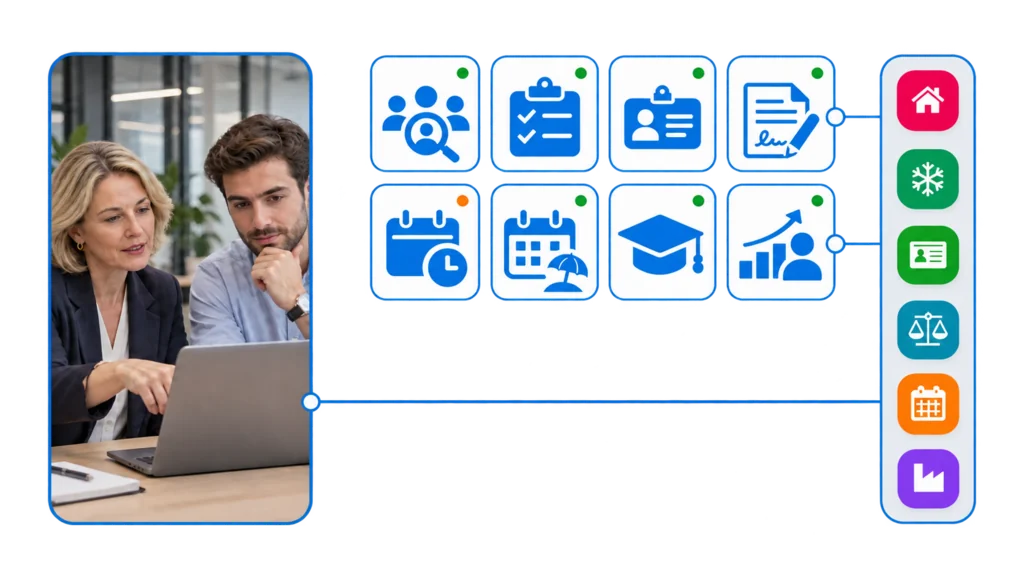
Your HR team should not have to search through spreadsheets, paper files and separate systems to understand its workforce. SIX PeopleFlow brings employee records, contracts, working time, attendance, leave, skills, documents and performance into one organised and secure people record.

Build a stronger workforce with SIX PeopleFlow

From onboarding and everyday administration to development and long-term retention, employees, managers and HR teams work with the same current information. This simplifies routine processes, improves workforce planning and helps your organization support people, maintain compliance and make better decisions.

One complete and traceable employee record

Keep personal details, contracts, documents, positions, responsibilities and employment history together—giving authorized HR teams and managers a reliable view of every employee throughout their journey with the company.

Time and leave without confusion

Connect working time, attendance, timesheets, holidays and sick leave in one process. Give employees and managers current information while reducing manual calculations, duplicate entries and scheduling conflicts.

Skills and performance made visible

Record qualifications, competences, training, objectives and performance development. Understand where your organization is strong, identify missing capabilities and support employees with clearer opportunities for growth.

HR processes built for compliance

Manage sensitive employee information through controlled access, structured approvals and traceable records. Help HR maintain consistent processes, protect personal data and provide a clear audit history when required.

How it works

SIX PeopleFlow connects the complete employee journey, from recruitment and onboarding to everyday employment, development, role changes, and controlled offboarding. Each employee has one secure record containing contracts, documents, positions, responsibilities, qualifications, training, performance history, working schedules, and leave information. Planned working time is compared with actual attendance, overtime, holidays, sick leave, and other absences. Employees can record their hours through time tracking and timesheets, while managers review and approve how time is assigned to projects, manufacturing orders, service appointments, departments, or internal activities. In larger factories, PeopleFlow can integrate door-entry terminals, access cards, or similar attendance-control systems to record arrivals, departures, breaks, and shift attendance directly from the workplace. This gives HR and production managers a reliable view of scheduled and actual working time while helping identify lateness, missing entries, overtime, and staffing gaps. Approved availability, skills, and working hours can then inform ManufacturingFlow, ServiceFlow, ProjectFlow, and FinanceFlow, ensuring workforce information supports daily operations, payroll preparation, cost control, compliance, and long-term planning.


From the first working day to long-term growth

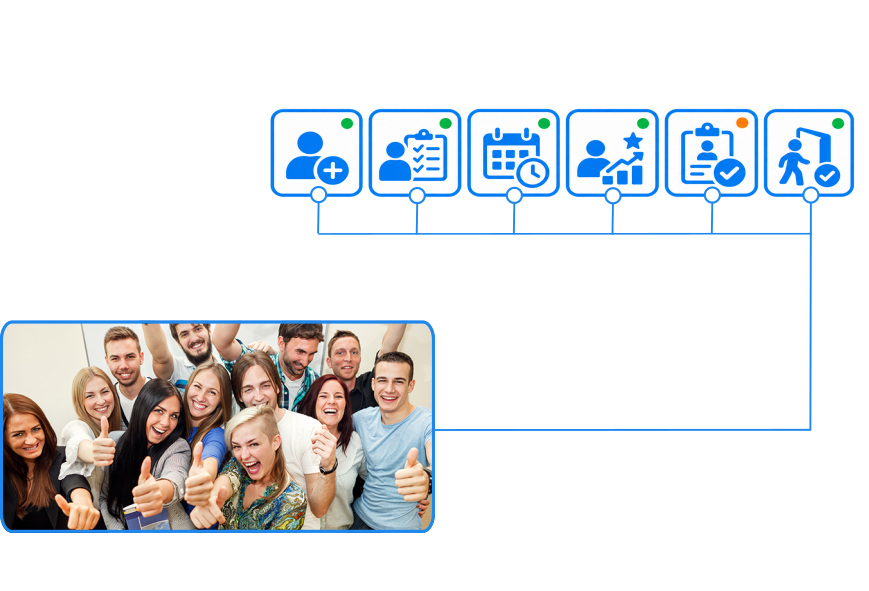
Connect every stage of the employee journey—from onboarding and everyday administration to attendance, leave, development, role changes and offboarding. SIX PeopleFlow keeps employees, managers and HR teams working from the same reliable people information.

Once complete employee journey

Manage the complete employee journey with SIX PeopleFlow

SIX PeopleFlow keeps every HR stage connected. Create employee records, maintain contracts and documents, track working time and leave, manage skills and training, support performance reviews and preserve a complete employment history—without losing context or entering the same information repeatedly.

One employee lifecycle. Three connected stages.

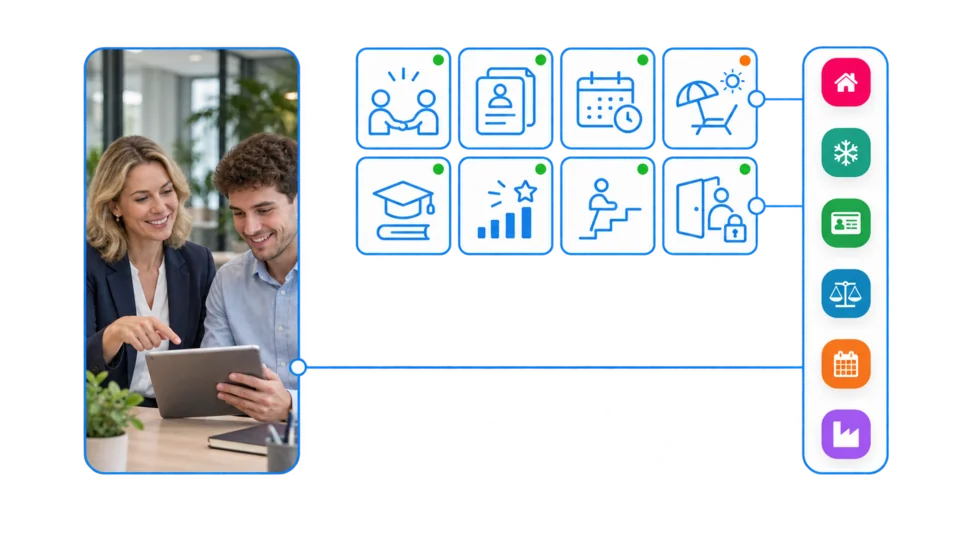
From the first application to everyday employment and a well-managed departure, SIX PeopleFlow keeps employee information, responsibilities and HR actions connected. Explore the three stages that help your organisation attract, support and transition its people with clarity.

Define the Right Position

Describe the role, responsibilities, required skills, employment conditions and reporting structure before recruitment begins. Give HR and hiring managers one clear understanding of who the organisation needs.

Manage Candidates Consistently

Keep applications, candidate information, interview progress, evaluations and decisions in one structured recruitment process. Reduce disconnected emails and maintain a clear history of every selection.

Move from Selection to Employment

Turn the selected candidate into an employee record without entering the same information again. Prepare the required offer, contract details, documents and internal approvals for the new employment relationship.

Prepare Every New Starter

Coordinate documents, workplace access, equipment, training and responsible managers before the first working day. Give new employees a structured introduction to their role and organization.

Maintain One Employee Record

Keep personal details, contracts, positions, documents, responsibilities and employment changes together. Give authorized teams a current and reliable view of every employee.

Control Time, Attendance and Leave

Connect working schedules, attendance, timesheets, holidays and sick leave in one process. Keep employees, managers, HR and affected operational teams informed when availability changes.

Develop Skills and Performance

Record qualifications, competences, training, objectives and performance reviews. Identify capability gaps, support employee development and assign work to people with the required skills.

Connect People with Daily Operations

Link employee availability and responsibilities with projects, manufacturing, field service and other business activities. Help managers plan work using current workforce information.

Start a Controlled Exit Process

Record the departure reason, final working date, responsible managers and required actions. Coordinate HR, management, IT, payroll-related preparation and operational teams through one structured workflow.

Transfer Work and Responsibilities

Reassign open tasks, appointments, projects, customer responsibilities and approvals before the employee leaves. Reduce disruption and prevent important work from being left without an owner.

Recover Assets and Close Access

Track the return of equipment, keys, documents, vehicles and other company property. Coordinate access removal so company systems and sensitive information remain protected.

Preserve a Compliant Employment History

Complete final documents and retain the required employment records according to company policy and applicable rules. Maintain a traceable history while respecting access restrictions and personal-data retention requirements.

See other SIX ERP Resources

Learn how supplier performance scorecards turn purchasing, delivery, and quality data into better decisions. Explore key KPIs, weighted scoring, performance thresholds, and how connected ERP systems help reduce supplier risks, prevent production delays, and control purchasing costs.

Read More >
The Right ERP System Doesn't Always Come from the Biggest Vendor

Why in-depth business analysis, personal attention, and long-term partnership can matter more than a globally recognized brand.

Read More >
Manufacturing ERP: Turn Your Factory Into a Connected Business

Discover practical tips for a successful manufacturing ERP implementation, from choosing the right system and preparing accurate data to improving inventory control, production planning, and employee training. Learn how a structured ERP rollout connects factory operations, reduces costly errors, and helps manufacturers improve efficiency, traceability, and profitability.

Read More >

Understand the different types of Bill of Materials (BOM), from single-level and multi-level BOMs to configurable, phantom, engineering, and manufacturing BOMs. Learn how ERP systems manage product variants, material requirements, production planning, and costing while reducing errors and improving manufacturing efficiency.

Read More >

Industries

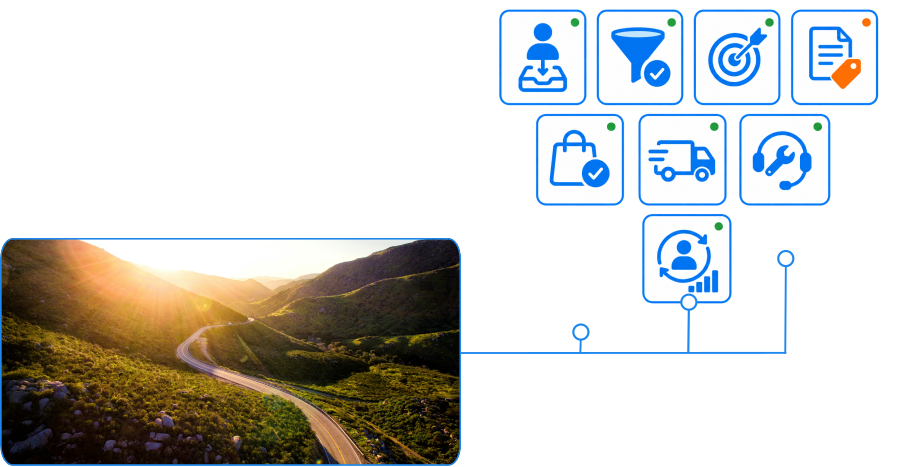
SIX PeopleFlow supports organizations across virtually every industry by connecting employee records, recruitment, onboarding, contracts, working time, attendance, leave, skills, performance, and offboarding in one controlled environment. It adapts to different workforce structures, from office teams and mobile technicians to shift-based factories, warehouses, construction sites, and multi-location businesses. By working directly with ManufacturingFlow, ServiceFlow, ProjectFlow, and FinanceFlow, PeopleFlow connects employee availability, qualifications, timesheets, and labor costs with the operational processes where people perform their work. Organizations can manage standard schedules, flexible working arrangements, overtime, field assignments, project hours, and factory attendance through integrated door-entry controls. This gives HR teams and managers reliable workforce information, clearer responsibilities, stronger compliance, and better control over staffing, productivity, skills, and labor costs.

PeopleFlow Industries

And many more industries, including automotive, agriculture, furniture manufacturing, energy, utilities, education, printing, packaging, telecommunications, and organizations managing employees across multiple departments, locations, shifts, projects, or legal entities.

Industries We Serve

Manufacturing & Industrial Production

Wholesale Distribution & B2B Trading

Retail, E-Commerce & Consumer Goods

Professional & Consulting Services

Automotive, Machinery & Equipment

Healthcare, Medical Devices & Pharma

Construction, Engineering & Real Estate

Logistics, Transport & Supply Chain

Financial, Insurance & Business Services

Field Services & Technical Maintenance

Resources

From Recruitment to Offboarding: Managing the Complete Employee Lifecycle with SIX PeopleFlow

Discover how connected HR management brings recruitment, onboarding, employee records, time, leave, skills, performance and structured offboarding into one secure process. Learn how SIX PeopleFlow helps HR teams support employees, maintain compliance and preserve a complete workforce history from entry to exit.

Frequently Asked Questions

Solutions PeopleFloww Frequently Asked Questions

  • What is SIX PeopleFlow?

    SIX PeopleFlow is the HR and workforce management part of SIX ERP. It connects employee records, contracts, working time, attendance, leave, skills, performance and everyday HR processes in one organized system, so employees, managers and HR teams work from the same current information.

  • Can PeopleFlow track employee and worker attendance time with a door control system?

    Yes. A full door control system can control employee and worker attendance. PeopleFlow can integrate door-entry terminals, access cards or similar attendance-control systems to record arrivals, departures, breaks and shift attendance directly from the workplace. HR and production managers then see scheduled time next to actual time, which helps them spot lateness, missing entries, overtime and staffing gaps. This is especially useful in larger factories with many shift workers.

  • Can PeopleFlow compare planned working time with actual attendance?

    Yes. PeopleFlow compares planned schedules with actual attendance, overtime, holidays, sick leave and other absences. Employees and managers work from the same current information. This means fewer manual calculations and duplicate entries.

  • How do employees record their working hours?

    Employees record hours through time tracking and timesheets. Managers review and approve how that time is assigned to projects, manufacturing orders, service appointments, departments or internal activities.

  • Can PeopleFlow help identify missing time entries and overtime?

    Yes. Because planned and actual time sit in one process, missing entries, late arrivals, overtime and staffing gaps are visible to HR and managers. Door-entry or access-card data makes this easier because it records attendance directly at the workplace.

  • Can attendance data be used for payroll preparation and cost control?

    Yes. Approved availability, working hours and time assignments can inform FinanceFlow. That supports payroll preparation and cost control. Time can also be linked to ManufacturingFlow, ServiceFlow and ProjectFlow, so labor is tied to the work it was spent on.

  • Does PeopleFlow work for shift-based production environments?

    Yes. PeopleFlow records shift attendance, breaks, arrivals and departures. Approved availability, skills and working hours can inform ManufacturingFlow, so production managers can plan with current workforce information.

  • Can managers see who is available when planning work?

    Yes. Approved availability, leave and working hours are linked to projects, manufacturing and field service. Managers can plan work using current workforce data. They can also assign tasks to people who have the required skills.

  • Who can see employee attendance and HR data?

    Access is role-based. HR teams and managers see the information they are authorized to see. Operational teams only see what their work requires. Sensitive employee data is protected by controlled access, structured approvals and traceable records.

  • Is PeopleFlow suitable for small and large companies?

    Yes. SIX ERP serves small and mid-sized businesses as well as larger organizations. The attendance control integration with door terminals is most relevant for larger factories and sites with many workers.

  • What information does the employee record contain?

    The employee record keeps personal details, contracts, documents, positions, responsibilities and employment history together. Authorized HR teams and managers get a reliable view of each employee throughout their time with the company.

  • Can PeopleFlow support recruitment?

    Yes. You can describe a role, its responsibilities, required skills, employment conditions and reporting structure before recruitment begins. Applications, candidate information, interview progress, evaluations and decisions stay in one structured process with a clear history of each selection.

  • Do I have to re-enter data when a candidate is hired?

    No. The selected candidate becomes an employee record without entering the same information again. You can then prepare the offer, contract details, documents and internal approvals for the new employment relationship.

  • How does PeopleFlow help prepare a new starter?

    It helps you coordinate documents, workplace access, equipment, training and responsible managers before the first working day. This gives new employees a structured introduction to their role and the organization.

  • Can PeopleFlow track skills, training and performance?

    Yes. You can record qualifications, competences, training, objectives and performance reviews. This shows where the organization is strong, identifies capability gaps and helps you assign work to people with the required skills.

  • How are employees’ availability and responsibilities linked to daily operations?

    Employee availability and responsibilities can be linked with projects, manufacturing, field service and other business activities. Managers can plan work using current workforce information.

  • What does PeopleFlow offer for employees who are leaving?

    PeopleFlow supports a controlled exit process. You record the departure reason, final working date, responsible managers and required actions, and coordinate HR, management, IT, payroll-related preparation and operational teams in one structured workflow.

  • How does PeopleFlow prevent work being left without an owner when someone leaves?

    Before the employee leaves, you can reassign open tasks, appointments, projects, customer responsibilities and approvals. You can also track the return of equipment, keys, documents, vehicles and other company property, and coordinate access removal.

  • How long are employment records kept?

    PeopleFlow helps you retain the required employment records according to company policy and applicable rules, while respecting access restrictions and personal-data retention requirements. The retention periods themselves depend on your policy and the rules that apply to you.

  • How do I see PeopleFlow in action?

    with a SIX specialist and describe your HR processes, so they can show how PeopleFlow fits them.

  • Can SIX PeopleFlow manage the complete employee lifecycle?

    Yes. SIX PeopleFlow connects recruitment, onboarding, employee records, contracts, working time, leave, skills, performance, role changes and offboarding. Each stage remains linked to one structured employee history from the first application to the final working day.

  • How does PeopleFlow manage working time, attendance and leave?

    PeopleFlow connects planned schedules with attendance, timesheets, overtime, holidays, sick leave and other absences. Employees and managers work with current information, while approved availability changes can inform affected projects, manufacturing schedules or field-service appointments.

  • Can PeopleFlow connect HR information with other SIX ERP processes?

    Yes. Approved employee availability, qualifications, time and responsibilities can support Manufacturing, Field Service, Projects, Finance and other business activities. Access remains role-based, so operational teams only see the information required for their work.

  • How does SIX PeopleFlow support HR compliance?

    PeopleFlow supports controlled access, structured approvals, traceable changes, document management and defined data-retention processes. It also organizes the information needed for GDPR, working-time controls and EU pay-transparency analysis. Final compliance still depends on correct configuration, company procedures and applicable national law.