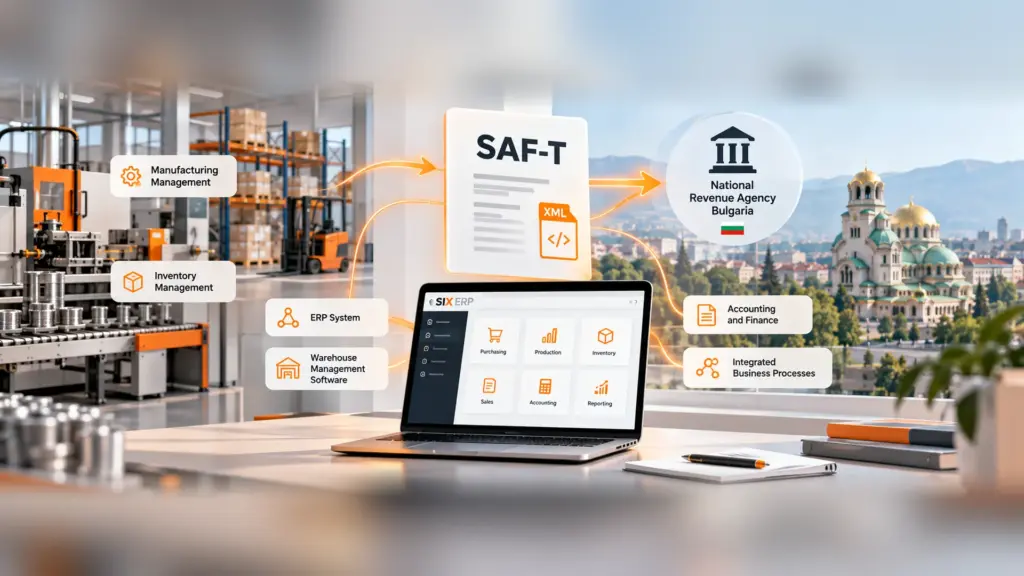


A lower license price doesn’t automatically make an ERPAn ERP system connects a company’s core processes—such as sales, finance, inventory, manufacturing, and service—in one place so teams can work with shared information. cheaper. The popular advice to replace SAP with a less expensive subscription overlooks the work your team must do to clean data, rebuild integrations, learn new processes, and keep orders moving during cutover. The better question is whether the replacement fits your operations at a lower total cost and acceptable risk.
SAP’s licensing structures can fit some organizations well. Per-user categories in SAP Cloud ERP Public Edition, Full Use Equivalents in Private Edition, and applicable digital-access rules support different access and integrationIntegration connects systems so they can exchange information or coordinate actions. An ERP integration helps link business tools and reduce manual transfers between them. needs. They also require careful modeling. A production employee checking materials doesn’t necessarily need the same access as a financial controller, and an external application can raise different commercial questions from a person signing in.
Illustrative calculation, not a SAP quote: Assume a subscription averages €100 per user per month across 50 users. That equals €5,000 monthly or €60,000 annually before implementation, integrations, training, infrastructure, and support. Actual SAP pricing depends on the product, contract, access categories, and commercial terms.
Compare the cost of delivering the same business processes, not the price of two different bundles of software.
These 12 SAP alternatives offer different answers to the same problem. Some prioritize manufacturing depth, others financial consolidation, broad employee access, local operating requirements, or configurable workflows. Before committing to replacement, consider whether narrower strategies for updating outdated systems could solve the problem without changing the entire operational core.
1. SIX ERP
Best fit: Organizations that want purchasing, stock, production, service, projects, and finance to work from shared operational records.
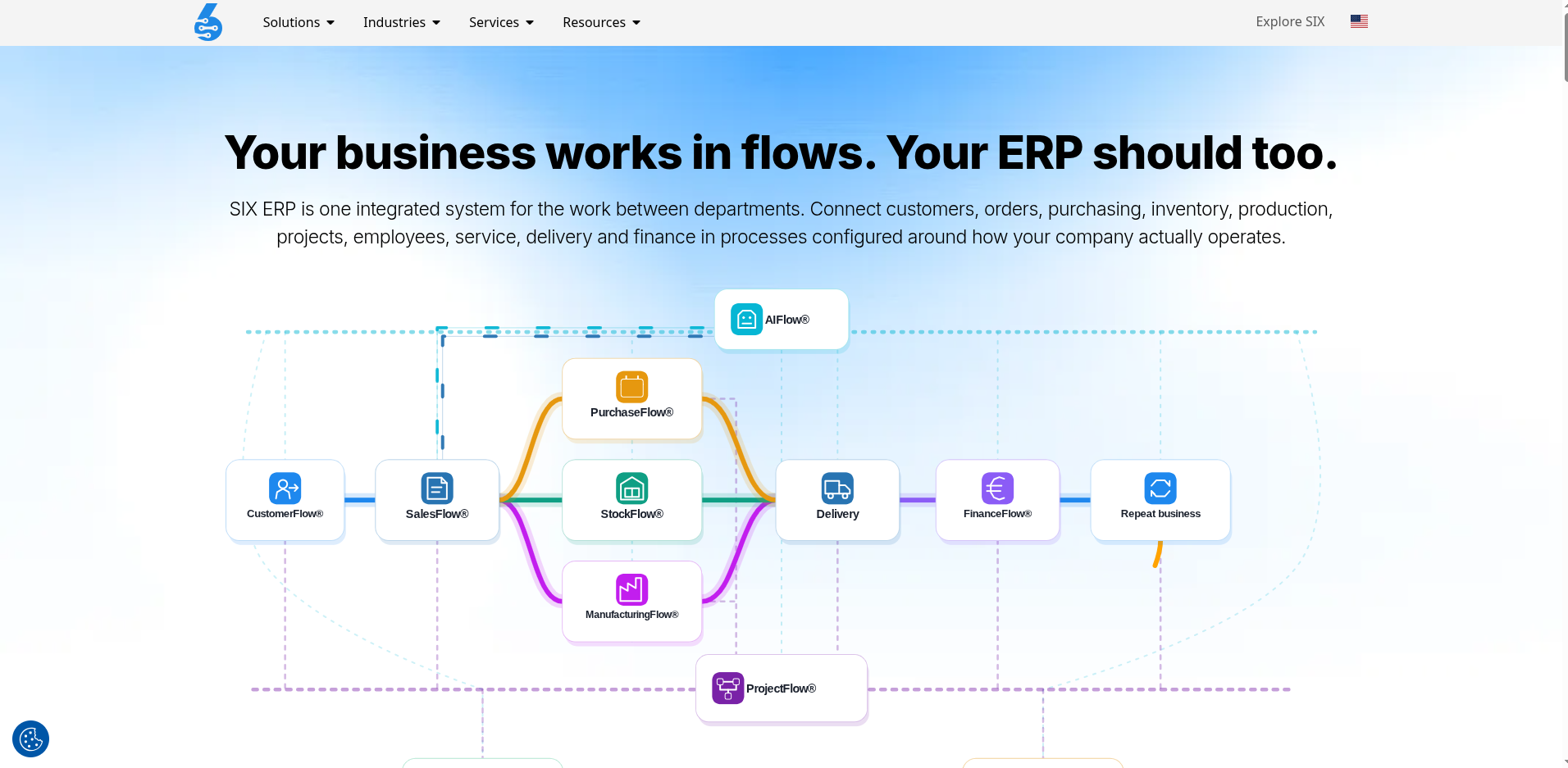
Our platform connects departments around business flows rather than treating each module as an isolated application. Each customer runs a separate, managed instance, not a shared multi-tenant SaaS environment. We provide process analysis, configurationConfiguration sets up software using its existing options. In an ERP system, it adapts workflows, roles and other settings to the company's business processes., integrations, training, and ongoing operational support.
Consider a hypothetical furniture manufacturer receiving a sofa order. SIX SalesFlow connects the customer commitment with stock availability, production or purchasing, picking, delivery, invoicing, payment status, and follow-up. ManufacturingFlow connects materials and capacity, while StockFlow supports guided warehouse activity and traceability.
What the operating model means for cost
Our package-based approach considers industry requirements and operating scale. Implementation, migration, integrations, and customizationCustomization changes or adds software functionality beyond standard settings. In an ERP project, it can meet specific business needs while adding development and maintenance work. need separate scope. There’s no public price in the information available for this comparison, so a credible ownership estimate requires a defined process map and proposal.
- Published capabilities: Web and mobile applications, open APIs, permission controls, audit trails, shared reporting, and configurable workflows.
- Editorial assessment: A relevant option when disconnected systems create repeated entry and unclear handoffs between office, production, warehouse, and field teams.
- Main limitation: Flexibility doesn’t remove implementation work. Process owners must approve workflows, resolve inconsistent records, and participate in testing.
For specialized equipment, we support API-based integrations, but a machine connection still needs agreed event definitions, error handling, and maintenance ownership. Don’t assume it’s cheaper than SAP without comparable proposals.
Our workflow intelligence guide provides additional product context. No published, named case supplied for this comparison establishes a complete SAP migration with exact savings, duration, and comparable before-and-after KPIs. General customer outcomes shouldn’t be presented as proof of SAP replacement results.
2. Microsoft Dynamics 365 Business Central
Business Central belongs on the shortlist when Microsoft tools already shape daily work. Familiarity can help adoption, but it doesn’t eliminate process design or partner dependence.
Microsoft’s Business Central product information describes an ERP for small and midsize businesses covering finance, sales, purchasing, inventory, fulfillment, projects, and operations. Manufacturing and service management belong to the Premium plan. Microsoft also publishes subscription pricing, which helps buyers establish a starting point before implementation and extensions.
For a distributor, test a complete sales order with a partial shipment, a backordered item, and a customer credit. For a manufacturer, require the proposed configuration to demonstrate material shortages, production changes, and finished-goods costing.
Where the fit becomes expensive
The main cost question isn’t whether Business Central connects with Microsoft applications. It’s how much partner work your industry process needs beyond the standard product.
- Strength: Broad coverage and a partner ecosystem can suit organizations seeking a Microsoft-centered operating environment.
- Trade-off: Advanced warehouse, production, or industry requirements may introduce extensions with separate costs and upgrade responsibilities.
- Migration burden: Financial dimensions, item records, units of measure, opening balances, and extension data all need agreed mappings.
My assessment is that Business Central deserves serious consideration for midsize companies whose processes fit its standard structure. It becomes less attractive when essential operations depend on a chain of loosely coordinated add-ons. Review the practical Dynamics 365 implementation challenges, then require the implementation partner to demonstrate the exceptions your employees handle daily.
3. Oracle NetSuite
A business with expanding entities and locations needs more than a replacement general ledger. It needs consistent customer, inventory, purchasing, and financial records without losing local operating detail.
Oracle NetSuite publishes a cloud business-management suite combining ERP and financials with customer relationship management and ecommerce. Its manufacturing offering includes bills of materials, work orders, work-in-progress, routing, and mobile production reporting. Buyers should confirm which capabilities appear in their proposed configuration rather than assuming the whole product family is included.
My assessment: NetSuite is relevant when financial consolidation and connected operations matter together. It may be excessive for a small company with straightforward accounting and limited inventory complexity.
Test configuration, not the product catalog
Ask the demonstration team to receive materials at one location, transfer them, consume them in production, and release finished goods. Finance should then trace the resulting inventory value and accounting entries.
- Cost exposure: Quote-based pricing depends on users, modules, implementation, and services.
- Operational strength: Broad coverage can connect sales and fulfillment with manufacturing and inventory records.
- Implementation risk: Subsidiary structures, costing methods, and custom scripts need careful design before migration.
Don’t accept a successful dashboardA dashboard brings key figures and status information together on one screen. An ERP dashboard helps teams monitor performance and identify issues that need attention. demonstration as evidence that intercompany transactions or production exceptions work. The cross-platform ERP comparison offers another way to frame workflow differences, but the deciding evidence should be your own scripted demonstration and a scoped commercial proposal.
4. Odoo
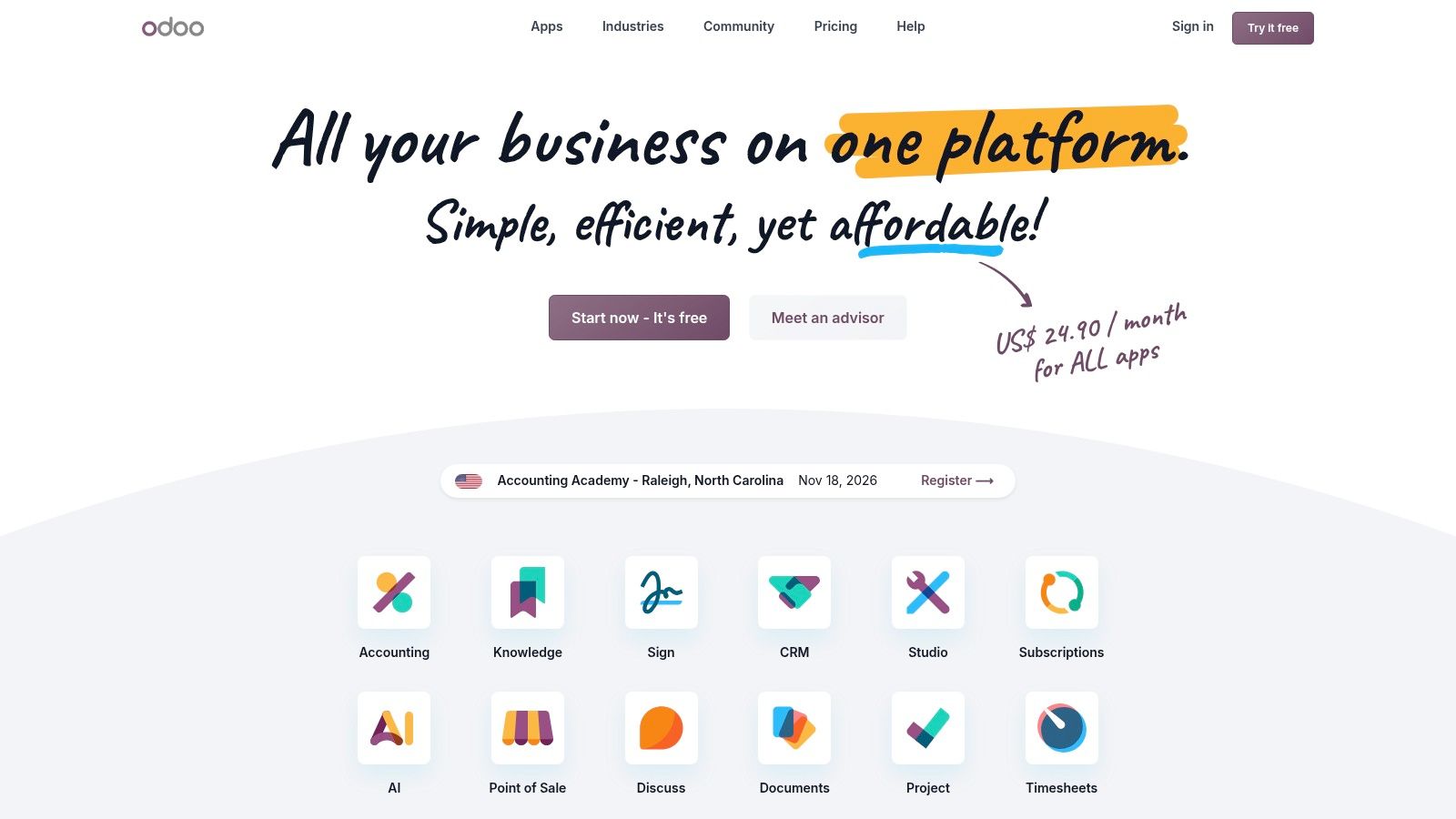
Odoo’s appeal is modularity. Its cost risk is uncontrolled customization. A company can begin with a limited business need, but replacing SAP requires more discipline than adding applications until the menu looks complete.
Odoo’s published platform information covers applications for CRM, accounting, sales, purchasing, inventory, manufacturing, HR, and projects. It offers published subscription pricing and a free single-app entry option. Hosting, APIAn API (Application Programming Interface) allows software systems to exchange information. Connected to an ERP system, it helps transfer business data and reduce manual entry. access, and deployment choices depend on the plan, with Custom supporting additional options.
The practical distinction is between a standard-app implementation and a custom software project. Both may be valid, but they require different budgets, skills, and maintenance commitments.
Keep extensions under control
- Good fit: Smaller businesses willing to adapt processes where standard applications already meet their needs.
- Cost concern: Development, testing, hosting choices, and maintenance can outweigh an attractive subscription.
- Migration priority: Decide which historical records must remain searchable and which transactions must become active operational records.
An academic study of open-source ERP repositories cautions against equating repository activity with production readiness, including because many repositories lack clear licensing information. Treat community modules as software dependencies that need technical and licensing review.
Regional implementation also matters. Guidance on Odoo ERP for Bulgarian businesses is relevant to buyers assessing local requirements. The broader Odoo alternatives guide can help determine whether modularity reduces complexity for your operation.
5. Acumatica Cloud ERP
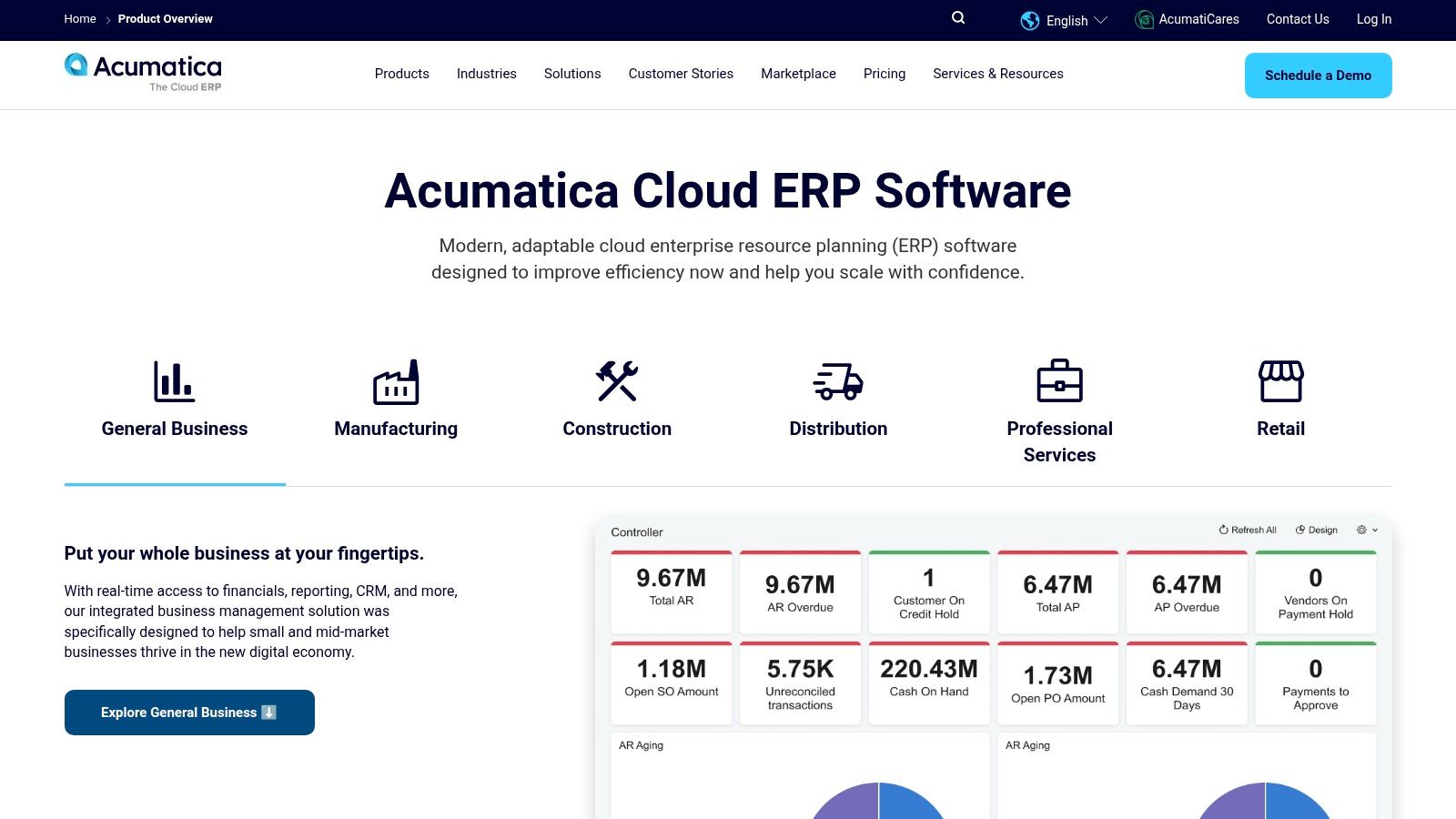
A warehouse-heavy business shouldn’t evaluate licensing only through office-user counts. Receivers, pickers, supervisors, production staff, and occasional approvers also need appropriate access.
Acumatica’s cloud ERP information presents industry editions and an unlimited-user licensing position, with pricing based on factors beyond user count. Its manufacturing capabilities include bills of materials, routings, production management, and material requirements planning, which calculates purchasing or production needs from demand and supply.
That model makes Acumatica worth evaluating when broad employee participation matters. It doesn’t establish that the system will cost less overall.
Commercial test: Model transaction growth, integrations, and operating scope alongside employee access. Unlimited users isn't the same as unlimited capacity or unlimited implementation work.
Where Acumatica fits
Its manufacturing and distribution coverage makes it relevant to product businesses, including those combining stock production with customer-specific work. Connected financials, CRM, distribution, and project accounting can help buyers avoid separate operational systems.
The main trade-off is configuration and partner execution. Buyers need the relevant edition, production approach, transaction assumptions, and integration boundaries written into the proposal.
For migration, prioritize item structures, warehouse locations, replenishment rules, and open demand. Then test a demand increase that creates both a purchasing requirement and a production shortage. My assessment is that Acumatica deserves a place on access-intensive manufacturers’ and distributors’ shortlists, but only after its quote reflects realistic activity and growth rather than today’s headcount alone.
6. Infor CloudSuite Industrial
Start with the exact Infor product and proposed architecture. An industry portfolio isn’t automatically a single deployment with every operational application included.
Infor’s industrial manufacturing information presents manufacturing-focused ERP options and related applications for production execution, warehouses, supply chains, and product lifecycle management. Those related applications can add useful depth, but buyers must distinguish the selected ERP’s included functions from separately scoped products and connections.
For a furniture manufacturer, that means testing product variants, material substitutions, production reporting, and delivery commitments in the actual proposed configuration. For process production, confirm the precise product and controls rather than assuming every manufacturing mode belongs to the same package.
Specialization versus implementation breadth
- Published position: Industry-focused manufacturing coverage with related operational applications and options for differing business complexity.
- Editorial assessment: Worth evaluating when manufacturing requirements are too specialized for a general accounting-led ERP.
- Potential mismatch: A broad application suite can recreate the integration and governance burden the buyer wants to leave behind.
Pricing requires direct scoping. Ownership cost should include each application, interface, monitoring responsibility, and environment, not just the ERP subscription.
Migration effort depends heavily on production structures and integration boundaries. If manufacturing execution remains outside the ERP, define who owns work-order status, material consumption, scrap, and completion reporting. A clear interface contract matters more than a promise that the applications integrate.
Infor may suit complex manufacturers, but buyers seeking a small, tightly bounded replacement should be cautious about expanding the project into a wider operational technology program.
7. Sage X3
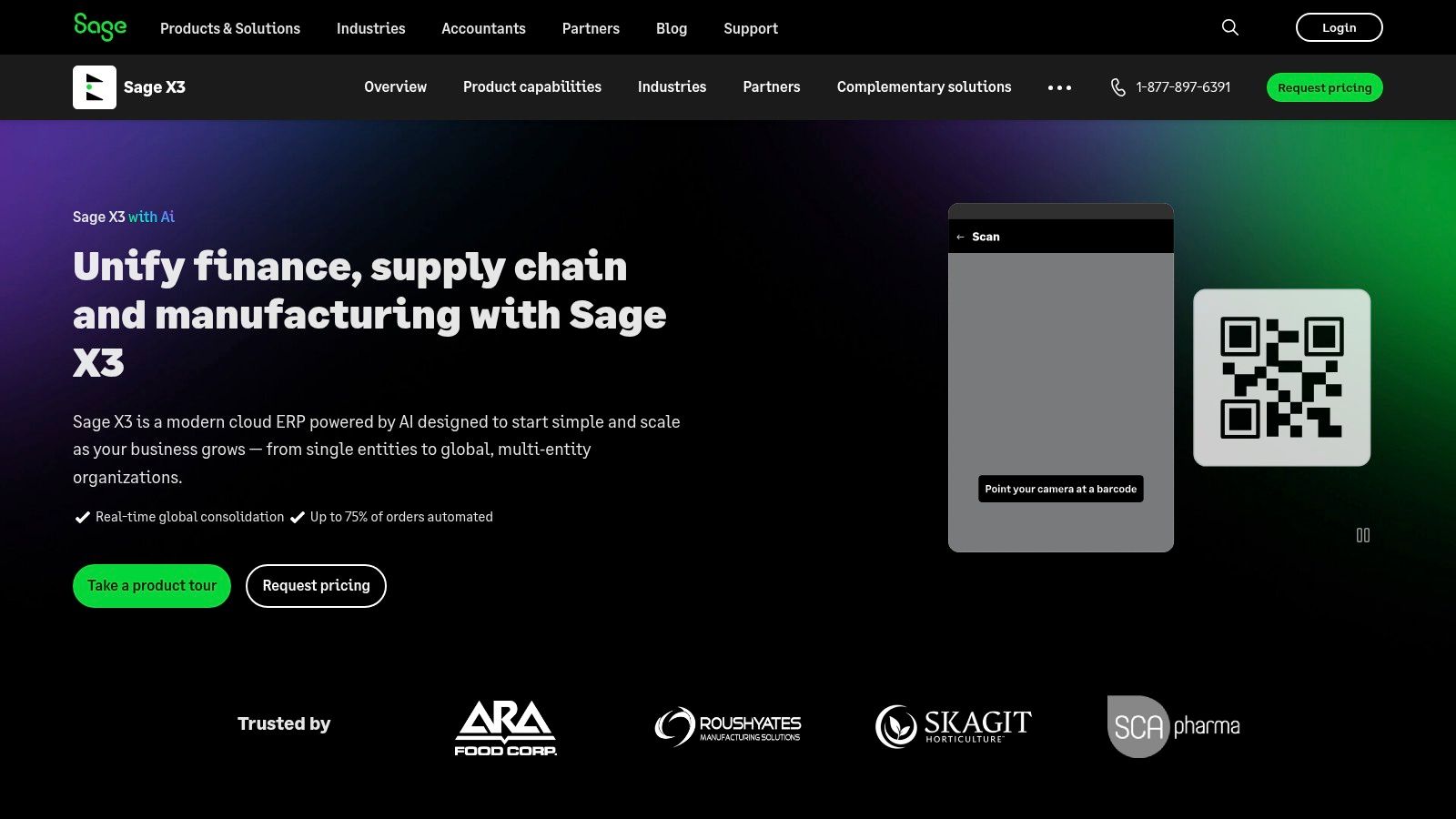
For a hypothetical dairy manufacturer, the decisive demonstration isn’t invoice entry. It’s tracing a received ingredient through production, finished stock, shipment, and a simulated recall.
Sage’s X3 product information describes a platform for product-centric manufacturing and distribution, including discrete, process, and mixed-mode manufacturing. Published capabilities include lot and batch traceability, recall-oriented controls, and multi-entity, multi-country, and multi-currency operations.
My assessment: Sage X3 is relevant when product traceability and regional operating complexity exceed the needs of a basic accounting system. It may be more software than a small, straightforward business needs.
Prove traceability with imperfect records
A useful demonstration should include a partial receipt, a quality hold, an ingredient substitution, and an affected customer shipment. Require users to show the source documents and approvalAn approval is a formal decision that allows a request or action to proceed. An ERP system can route approvals and record who made each decision. history, not merely a summary report.
- Strength: Manufacturing and distribution receive direct attention within the platform.
- Cost uncertainty: Pricing is quote-based, and deployment, localization, and partner services need explicit scope.
- Migration concern: Lot records, units of measure, expiry information, and historical links must retain their operational meaning.
Deployment control deserves equal attention. Mordor Intelligence’s manufacturing ERP analysis identifies sovereignty and sensitive-data concerns as reasons buyers consider hybrid architectures.
For any proposed deployment, document where recipes, customer records, backups, and integration data reside. Software can support traceability and controls, but the manufacturer remains responsible for determining and meeting its food safety and other legal obligations.
8. Epicor Kinetic
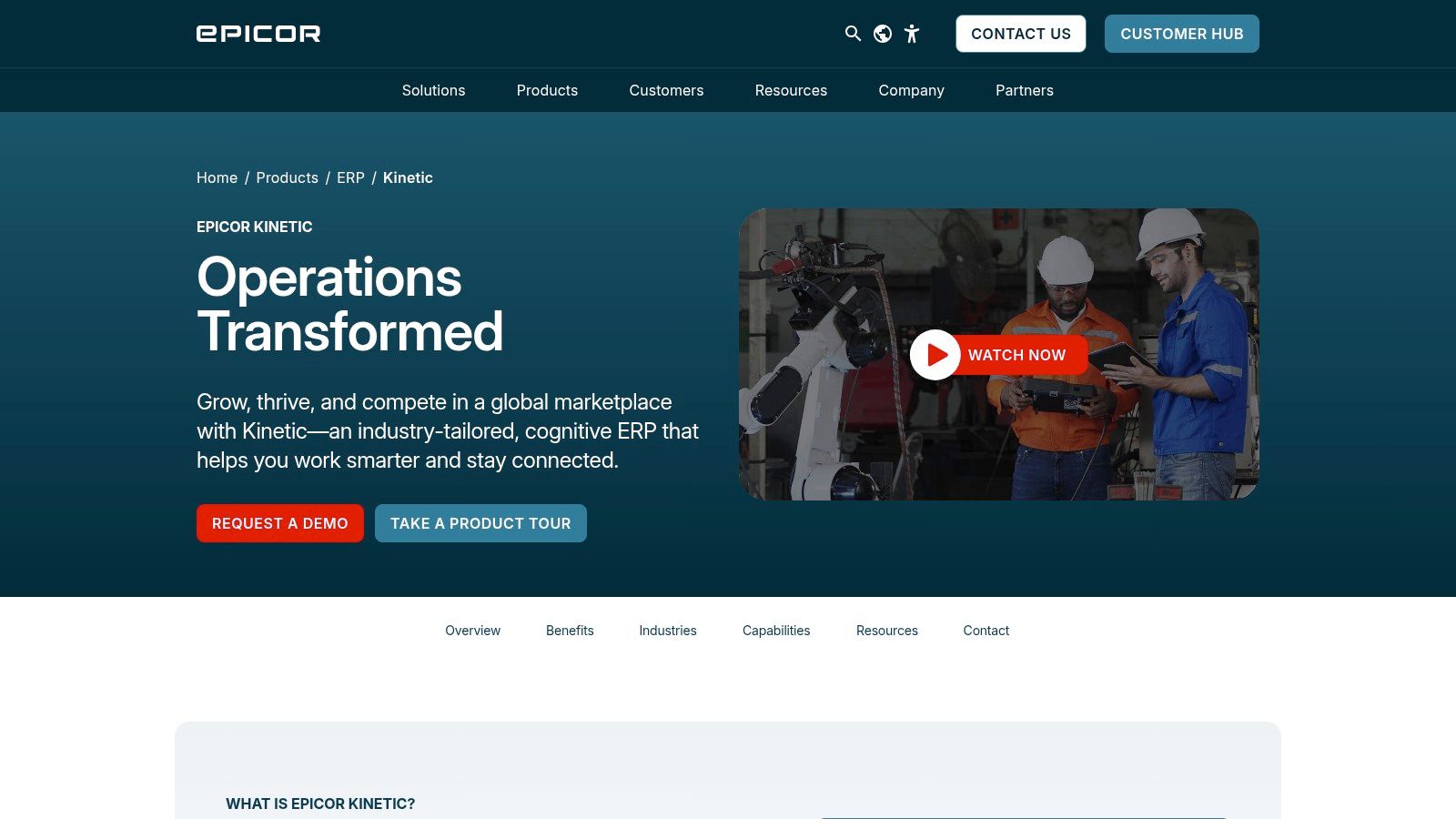
Choose Kinetic for a production problem, not because you want a different finance screen. Its manufacturing emphasis makes it most relevant when planning and execution drive ERP value.
Epicor’s Kinetic product information positions the system for manufacturers, including discrete and make-to-order operations. Its capabilities address manufacturing, procurement, projects, and shop-floor processes, with cloud ERP positioning and industry-focused functions.
A make-to-order business should demonstrate a customer revision after materials have been purchased and work has started. The planner needs to identify affected operations, purchasing needs to see changed demand, and finance needs a defensible view of cost.
Define the production boundary
The implementation proposal should make clear which activities employees record directly in Kinetic and which remain in external scheduling, machine, or shop-floor systems.
- Operational advantage: Manufacturing is central to the product’s positioning.
- Commercial limitation: Quote-based pricing prevents a meaningful comparison without defined scope.
- Poor fit: Businesses mainly seeking lightweight finance, customer management, and HR may gain little from manufacturing depth.
Migration work should prioritize bills of materials, routings, work centers, unfinished jobs, and costing assumptions. Don’t copy obsolete production structures because they exist in SAP.
My assessment is that Kinetic belongs on production-led manufacturers’ shortlists. Its value depends on whether planners and operators can handle real exceptions with controlled records, not whether a standard product tour looks thorough. Allocate implementation time to those users, not just administrators.
9. IFS Cloud
A manufacturer that also maintains installed equipment has a different ERP problem from a company that ships products and stops there. Asset history, service work, spare parts, and customer commitments must stay connected.
IFS’s ERP product information presents a platform combining ERP with enterprise asset management and field service management. Its manufacturing offering connects production, supply chain, assets, and service, supported by permissions, approval workflows, and audit logging.
My assessment: IFS Cloud is especially relevant when manufacturing and after-sales service are both core operations. That breadth can be unnecessary for a smaller company without meaningful asset or service complexity.
Don’t approve an asset-and-service ERP until a technician’s completed work can be traced to parts consumption, customer acceptance, invoicing, and financial records.
Test the factory-to-field handoff
Use a hypothetical equipment delivery followed by a warranty visit. The demonstration should preserve the equipment identity, identify coverage, reserve a spare part, assign a technician, and distinguish billable from nonbillable work.
Pricing is quote-based and depends on scope. Include mobile processes, integrations, service capabilities, and any specialist applications in the ownership model.
Migration requires more than customer and inventory records. Equipment hierarchies, serial numbers, service histories, warranties, contracts, and open work need deliberate treatment. If those records are incomplete, the business must resolve ownership and quality before importing them. IFS may offer the right functional breadth, but it won’t make an unclear installed-equipment register reliable by itself.
10. Oracle Fusion Cloud ERP
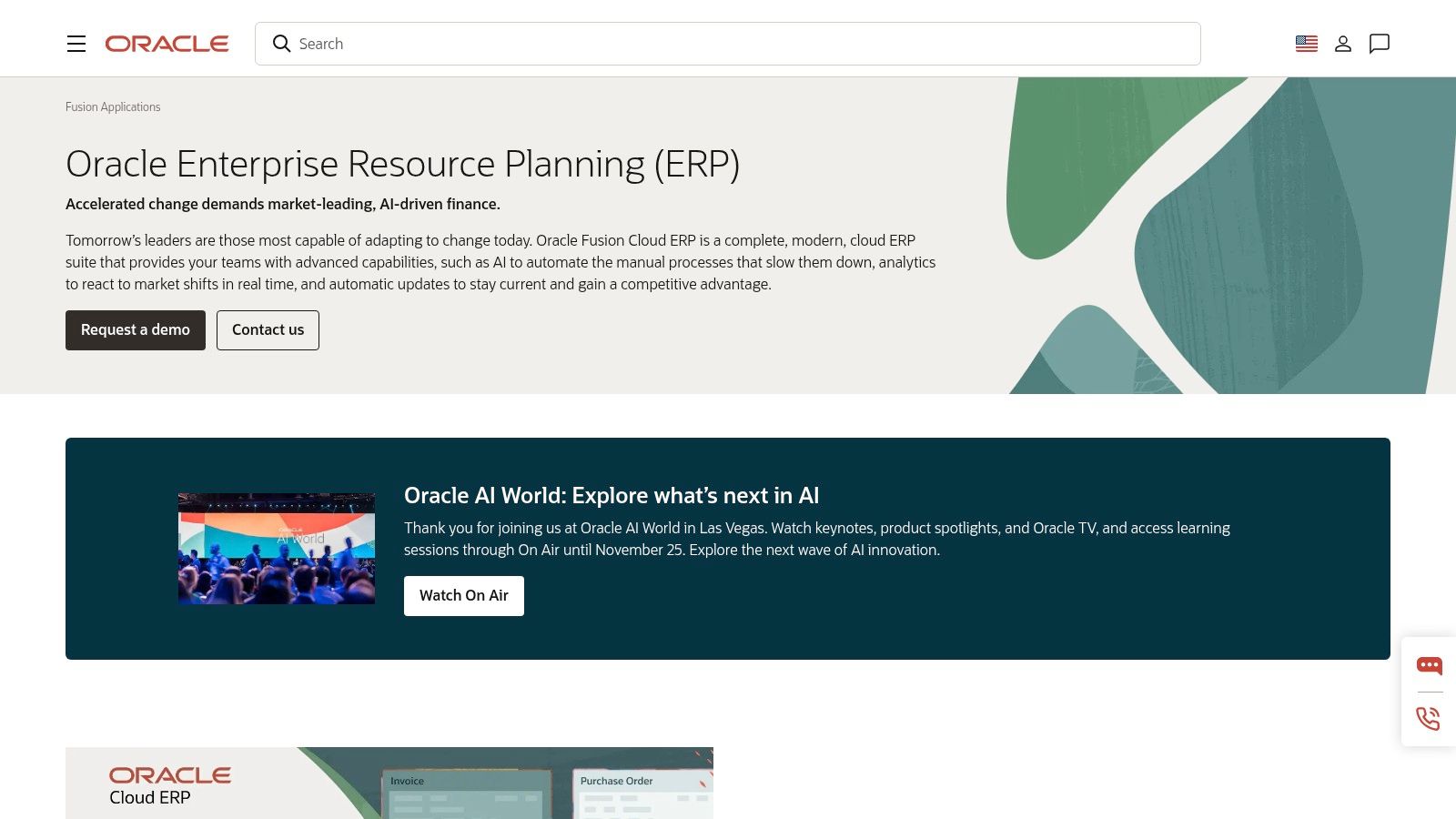
Oracle Fusion Cloud ERP and NetSuite aren’t interchangeable shortlist entries. Fusion addresses enterprise operating requirements, while NetSuite warrants a separate assessment against its own configuration and scope.
Oracle’s Fusion Cloud ERP information describes financial management, procurement, project management, and enterprise performance management, with related supply-chain and manufacturing applications. Oracle also presents embedded analytics and AI capabilities across its cloud offering. Buyers must establish which applications and services their proposal includes.
For large organizations with complex finance and operating structures, that breadth can justify a serious evaluation. For a smaller business trying to reduce administrative load, it may introduce more implementation work than the problem warrants.
Compare enterprise scope honestly
- Published strength: Broad enterprise finance coverage with connected procurement, projects, planning, and operational applications.
- Editorial assessment: Relevant to organizations replacing enterprise-scale SAP processes rather than seeking a lightweight alternative.
- Main trade-off: Application breadth, integration design, testing, and organizational change can make the project substantial.
A credible migration plan must address financial structures, approval authority, intercompany activity, operational interfaces, and reporting continuity. Require the proposed team to demonstrate period close alongside purchasing and operational transactions.
Don’t select Fusion merely to move from one major vendor to another. If SAP already handles complex global operations reliably, staying with it may be the more economical choice. Fusion earns its place when a defined process, architectural, or commercial advantage outweighs replacement cost and disruption.
11. ERP.net
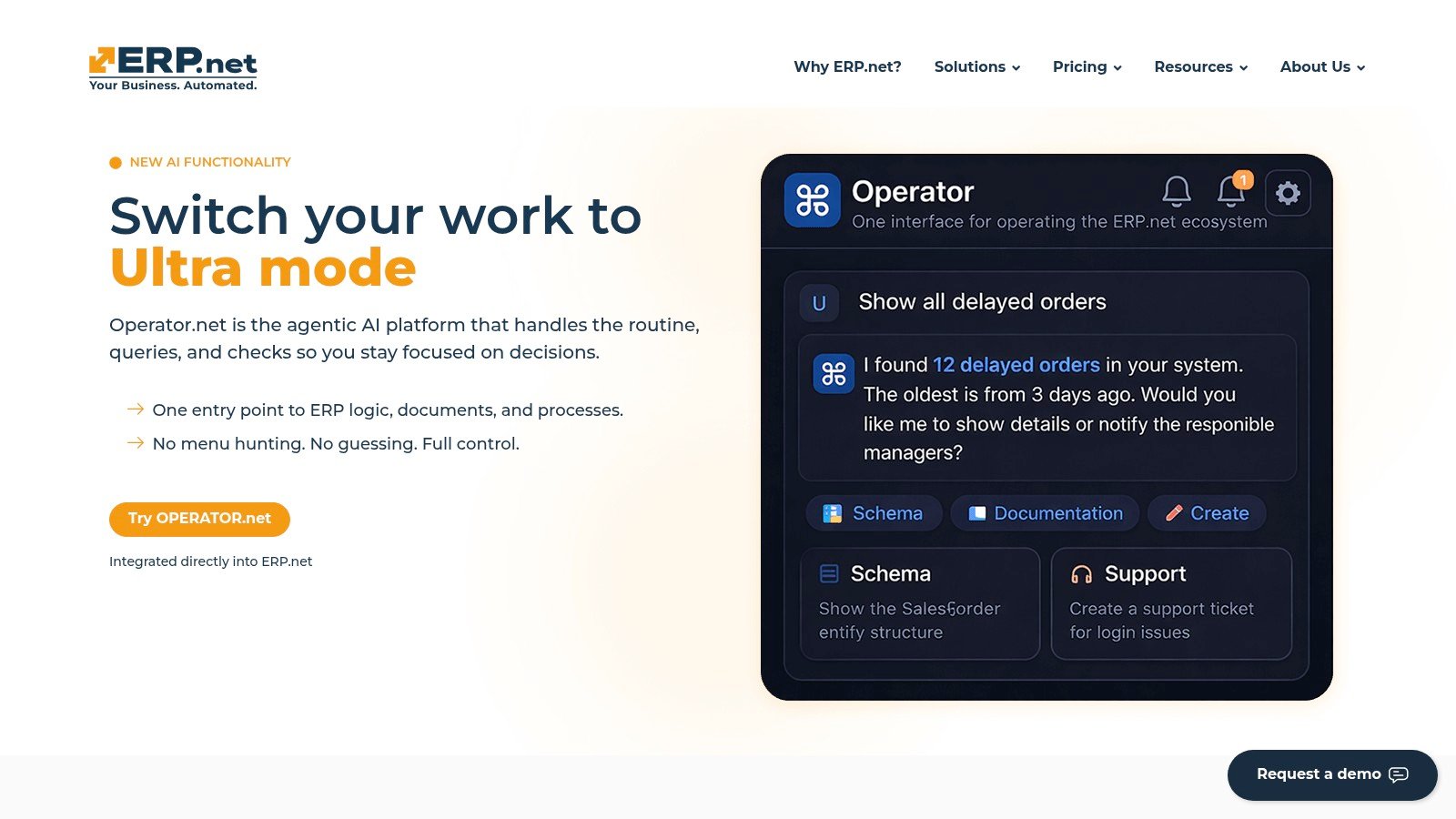
ERP.net is worth evaluating when distribution, production, finance, and CRM need to share operational data. Its platform overview describes a cloud ERP-CRM system with web, desktop, and mobile access. Published capabilities include production, logistics, warehouse management, and accounting, but buyers should verify which applications and functions their proposed edition includes.
The published pricing page lists an Express entry price starting at €6.90 per registered user per month under stated annual-payment and promotional conditions. Small Business starts at €29 per user per month and uses concurrent-session allowances with unlimited registered users. Enterprise requires a quote. These aren’t interchangeable pricing units, and an entry price is not a SAP replacement budget.
Test the edition and session model
Ask the vendor to demonstrate a sales order that creates a production requirement, reserves stock, triggers purchasing, and reaches invoicing. Include warehouse staff, planners, and occasional approvers in the concurrent-session model, then test what happens at peak activity.
- Potential fit: Businesses seeking connected production, distribution, and financial workflows with configurable processes and integrations.
- Commercial question: Which edition, applications, session limits, hosting arrangements, and implementation services are included in the proposal?
- Migration priority: Reconcile item and warehouse structures, production definitions, customer records, opening balances, and live orders before cutover.
ERP.net’s technical documentation supports investigation of its platform and integration options. Documentation is a starting point, not proof that a particular SAP integration or manufacturing exception works without configuration. My assessment is that ERP.net merits a scripted demonstration for operations-led buyers, especially when its licensing model reflects actual access patterns.
12. Zeron V/4 (Zeron.BG)
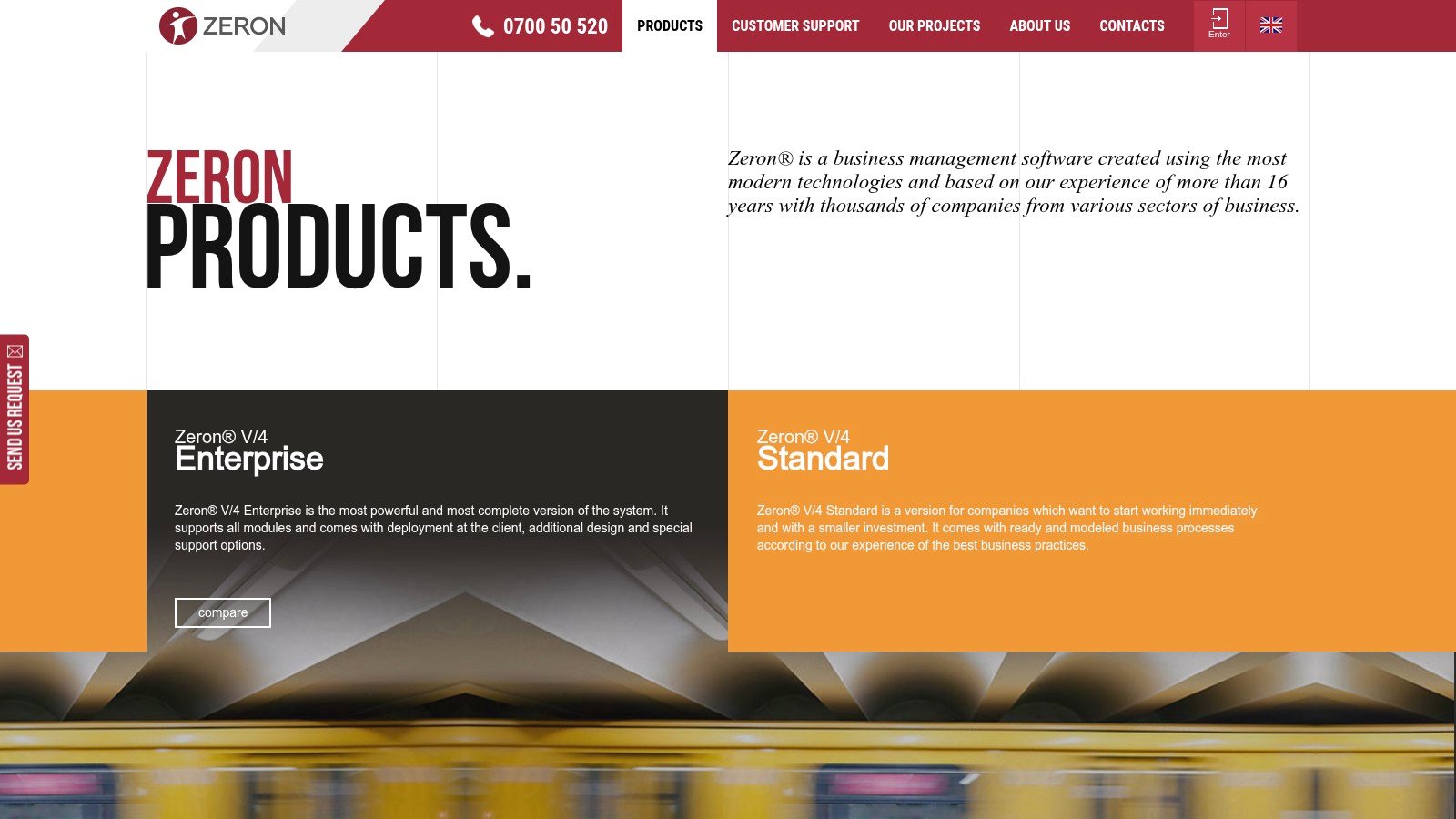
Zeron V/4 adds a distinct option for buyers evaluating Bulgarian business operations. The vendor’s product overview lists accounting and finance, storage and trade, manufacturing, CRM, service, and other operational modules. Evaluate the actual edition and localization requirements rather than assuming that a broad module list guarantees a complete replacement for your SAP setup.
The vendor describes Standard and Enterprise editions with different scope and implementation approaches. Its published warehouse and trade information includes lot and expiry tracking, serial numbers, and stock reporting. Enterprise planning capabilities should be demonstrated against your own demand, capacity, and production constraints.
Check local fit and deployment scope
For a manufacturer or distributor, ask the team to receive a batch, record a quality exception, plan production, ship an affected order, and trace the resulting stock and accounting records. If you operate across countries, require a separate demonstration of each necessary localization, currency, and reporting workflow.
- Potential fit: Organizations that value integrated Bulgarian accounting and operational processes alongside manufacturing or distribution.
- Cost uncertainty: No standard full-system price is established by the cited product information. Request an edition-specific quote covering licenses, implementation, deployment, integrations, training, and support.
- Migration priority: Validate accounting mappings, historical stock and lot data, open transactions, and any localized records before moving them.
My assessment is that Zeron V/4 belongs on a shortlist when its local operating fit matters. For a multinational SAP replacement, test international scope and support explicitly rather than extrapolating from its Bulgarian-market positioning. Neither its published features nor ERP.net’s should be treated as independently verified migration outcomes.
How the 12 SAP alternatives differ on best-fit buyer, pricing model, and manufacturing focus
| Item | Best for | Pricing cue | Manufacturing focus |
|---|---|---|---|
| SIX ERP | Businesses connecting workflows across departments | Pricing not publicly listed; contact vendor | Configurable manufacturing workflows with cross-team traceability |
| Microsoft Dynamics 365 Business Central | Small and midsize businesses using Microsoft tools | Published US license pricing | Manufacturing available in the Premium plan |
| Oracle NetSuite | Growing or multi-entity businesses | Quote-based | Work orders, routing, bills of materials, and production reporting |
| Odoo | Smaller businesses consolidating business apps | Published per-user pricing; free entry option | Modular manufacturing apps and inventory tools |
| Acumatica Cloud ERP | Manufacturers and distributors needing broad user access | Quote-based; not based on a simple per-user fee | Multiple production modes, BOMs, routings, and MRP |
| Infor CloudSuite Industrial | SMB and enterprise manufacturers with specialized needs | Quote-based | Industry-focused manufacturing with related operational applications |
| Sage X3 | Midsize product-centric manufacturers and distributors | Quote-based | Discrete, process, and mixed-mode production with traceability |
| Epicor Kinetic | Production-led manufacturers | Quote-based | Manufacturing-focused ERP for discrete and make-to-order operations |
| IFS Cloud | Complex industrial and asset-intensive organizations | Quote-based | Connects production with supply chain, assets, and service |
| Oracle Fusion Cloud ERP | Large enterprises with complex operations | Quote-based | Enterprise manufacturing, planning, and supply-chain applications |
| ERP.net | Businesses connecting distribution, production, CRM, and finance | Published entry prices vary by edition and licensing unit; Enterprise quoted | Production planning, warehouse management, and connected logistics |
| Zeron V/4 (Zeron.BG) | Businesses assessing Bulgarian accounting alongside manufacturing and trade | Quote required for defined edition and implementation scope | Manufacturing, stock traceability, and edition-dependent planning |
Choosing the Right SAP Alternative for Your Operations
If ERP.net or Zeron V/4 makes your shortlist, compare the editions and deployment terms against the same order-to-cash and production scenarios used for larger vendors. Confirm local accounting requirements, access limits, support coverage, and reference customers for the countries where you operate. Neither a published starting price nor a broad feature list establishes the cost or suitability of a SAP migration.
The right SAP alternative is the one that improves the processes your business depends on without creating an unaffordable transition. Start with evidence from current operations, not a vendor’s feature list. SAP may remain appropriate where global controls, specialized processes, and existing integrations already work well.
Before requesting final proposals, establish a baseline for the outcomes you want to improve. Assign an operational owner to each measure and agree how the team will collect it.
- Scheduling time: Record the effort required to produce and revise an executable production plan.
- Inventory accuracy: Compare physical quantities with system records using a consistent counting method.
- Purchasing cycle: Measure the time from an approved requirement to an issued purchase order.
- Finance close: Track the time needed to complete the same accounting scope.
- Order fulfillment: Measure order acceptance through confirmed delivery for comparable order categories.
Compare three- to five-year total cost of ownership using identical scope. Include licensing, implementation, data cleansing, integrations, training, internal staff time, parallel operation, support, updates, and eventual data export. Separate recurring charges from project costs, and identify which assumptions would trigger additional fees.
Implementation discipline matters as much as software choice. A systematic review of ERP implementation studies identifies management support, end-user training, process alignment, and technological readiness as major success factors. Give finance, operations, IT, and frontline users named responsibilities rather than leaving every decision to the project manager.
Make migration approval depend on operational proof
Use a phased rollout where dependencies allow it, but don’t split tightly connected processes just to make the project look smaller. If stock, production, and invoicing cross system boundaries, define which system owns each record and how teams reconcile discrepancies. A phase isn’t safe unless employees know where to complete the work.
Require documented acceptance criteria before cutover. Reconcile stock quantities, customer and supplier balances, open orders, and financial control totals. Test cancellations, returns, shortages, failed interfaces, and permission restrictions alongside normal transactions.
Prepare a rollback plan with decision authority, recovery steps, reconciliation responsibilities, and clear conditions for stopping the cutover. It reduces risk only when the team can execute it, including handling transactions created after the switch.
Keep business results separate from software installation. Faster scheduling doesn’t compensate for unreliable inventory, and lower licensing expense doesn’t compensate for disrupted production. Measure comparable workloads after stabilization, and account for changes in staffing, volume, and procedures before attributing improvements to the ERP.
Our consulting team can map current workflows, assess data and integration needs, and define a practical implementation roadmap. Bring a representative customer order, production or service job, purchasing exception, and month-end report to the discussion so the evaluation starts with real work.
SIX ERP offers connected operational workflows, a separate managed environment, and implementation support covering process mappingProcess mapping documents the steps, people and decisions involved in business work. In an ERP project, it helps define workflows and identify improvements before system setup., integrations, migration, and training. Request a free demo or consulting session focused on your current SAP processes, data requirements, and total ownership cost.