






A detailed comparison A detailed comparison of six ERP platforms—and why SIX ERP earns the top-of-breed position for companies that want one connected, managed, and

Understand and prepare for the practical caveats of EPR implementation and prepare for compliance around EPR, PPWR and DPP. Achieve real-world compliance before it is too late — January 15, 2027.
Your sales team should not have to search through emails, spreadsheets, notes, and separate systems to understand a customer. SIX ERP brings leads, contacts, activities, quotations, opportunities, orders, and service history into one connected customer record.

From the first enquiry to the next order, everyone sees the same information, the latest communication, and the actions that need to happen next. This helps your team respond faster, follow up consistently, and build stronger customer relationships without adding unnecessary administration.

Keep contacts, communication, opportunities, offers, orders and service history together—so every conversation starts with the full context.
Turn calls, meetings and enquiries into clear next actions. Tasks, reminders and activity history help your team follow through without relying on memory.
See where every opportunity stands, what needs attention and which deals are moving forward. Give managers a realistic view of expected revenue.
Connect lead capture, qualification, offers, orders and after-sales service in one process—so no promising enquiry is lost between teams or systems.
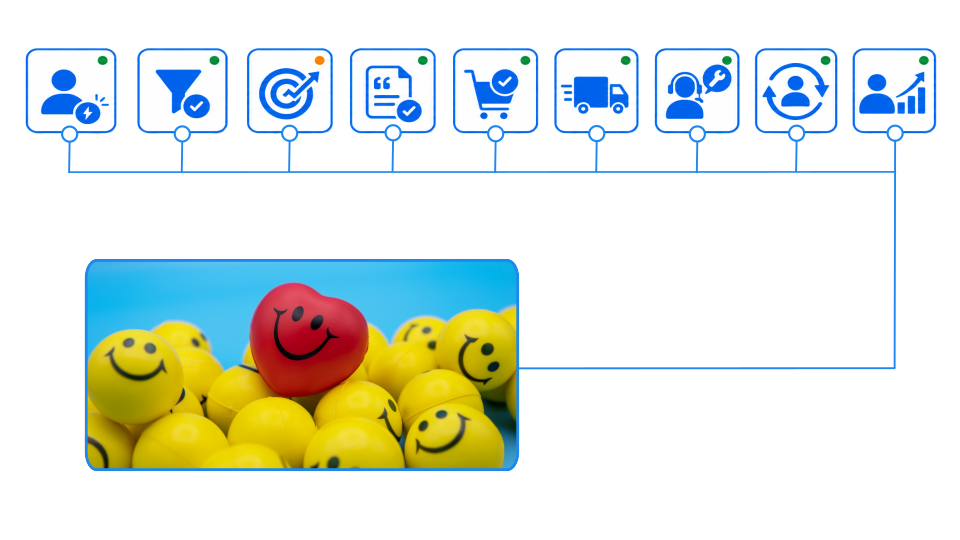
Connect every customer interaction—from lead capture and qualification to offers, orders, service and follow-up—to build stronger relationships and turn first enquiries into repeat business.

SIX CustomerFlow keeps every stage connected. Your team can capture a lead, qualify the opportunity, prepare an offer, convert it into an order and continue with delivery and service—without losing context or re-entering information.
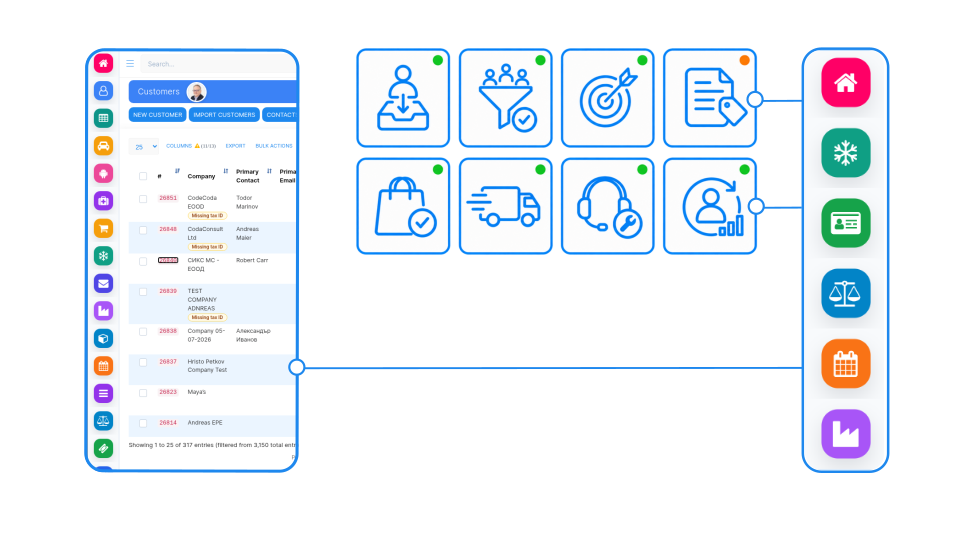
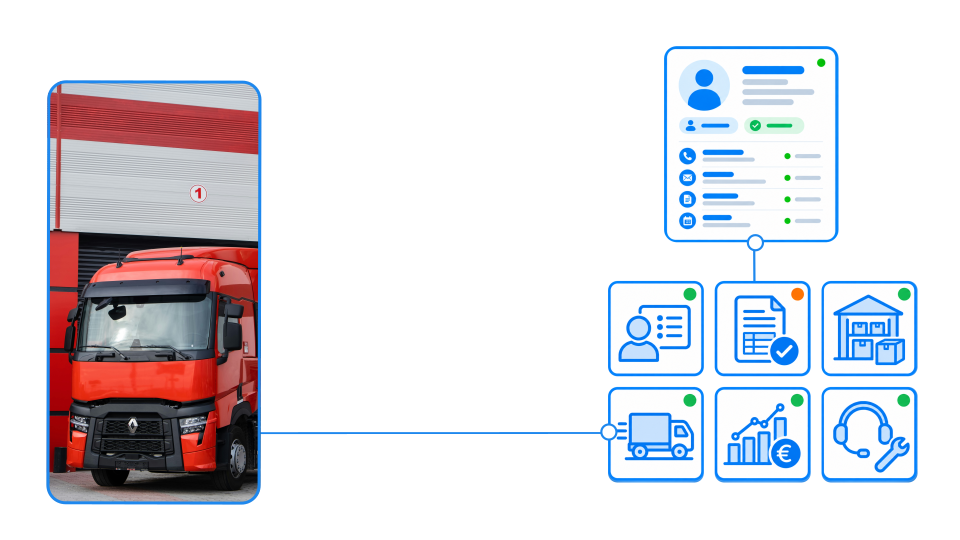
CustomerFlow is designed to do more than store contacts or manage a sales pipeline. It gives your teams a complete, shared view of every relationship—from the first lead and qualification through proposals, orders, delivery, service and repeat business. Conversations, activities, documents, opportunities and decisions remain connected in one complete customer record, while relevant information moves directly into the rest of your operations. An accepted opportunity can become an order, project, service job or production request; stock, purchasing and finance can follow; and every service interaction can strengthen the relationship. These highlights show how CustomerFlow turns everyday CRM activity into clear, coordinated business action.

Collect enquiries from web forms, email, campaigns, referrals, and direct entry.
Qualify leads, schedule follow-ups, assign responsibilities, and track every sales stage.
Create proposals, estimates, and orders directly from the opportunity—without entering data twice.
Continue the relationship through delivery, support, service, renewals, and new opportunities.

Keep companies, contacts, addresses, roles, and preferences in one structured record.
See calls, emails, meetings, notes, tasks, and activities in a single timeline.
Access proposals, contracts, orders, invoices, payments, projects, and service records.
Give sales, service, finance, and management the same complete and current customer picture.

Convert an accepted opportunity into an order, project, service job, or production request.
Check availability, reserve products, initiate purchasing, and follow fulfilment through delivery.
Carry customer and transaction data into invoicing, payments, credit control, and reporting.
Connect support tickets, field-service work, maintenance, and follow-up sales to the customer record.

A detailed comparison A detailed comparison of six ERP platforms—and why SIX ERP earns the top-of-breed position for companies that want one connected, managed, and

Managing ERP Transformation with Confidence Many companies begin with spreadsheets. This is normal. A spreadsheet is quick, familiar, and easy to change. It can track

How SIX SalesFlow Turns Demand into Revenue A successful sale does not begin with an order and end with an invoice. It begins when a

Managing Finance with SIX FinanceFlow Financial management is not limited to issuing invoices or checking a bank balance. It is the process of understanding where

Learn how cloud-based solutions help company owners face increasing complexity, expectations, and disruptions. Gain the agility, intelligence, and real-time visibility needed to boost efficiency, ensure quality, and empower more resilient operations.
Yes. SIX ERP CRM can be configured around your qualification stages, activities, approvals, documents and reporting needs—without forcing your team into a generic sales workflow.
Customer data does not stop at the sales team. Leads, offers and customer agreements can continue into orders, warehouse availability, delivery, invoices, service and financial reporting within the same SIX ERP environment.
Store customer information, communication history, consent-related data and activities in one controlled record. Role-based access and traceable changes help your team work with clearer accountability and stronger data governance.
Yes. Sales pipelines, expected values, planned activities and conversion reporting give managers a current view of open opportunities, follow-up quality and expected revenue—without assembling figures from separate spreadsheets.