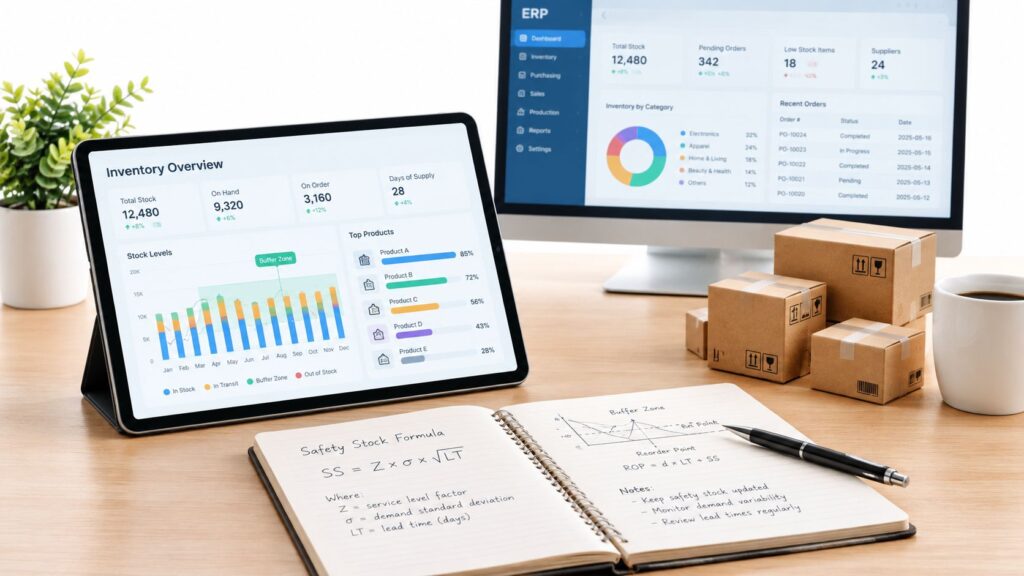


Your warehouse team can see stock on a screen, yet sales still can’t promise it with confidence. Purchasing orders more because it doesn’t trust the count, finance questions the value of what’s on the shelf, and production waits for material that the system says is available. That gap is where most distribution problems start. The stock record may be current, but it’s disconnected from the work that creates and consumes it.
That’s why the best warehouse management systems for distribution companies in 2026 aren’t the products with the longest feature list. They’re the systems that support your actual receiving, storage, picking, packing, dispatch and inventory control while keeping information consistent across departments. A distributor also needs transport partners who protect that flow once goods leave the dock, which is why reliable middle-mile logistics tips belong in the same operational conversation.
This list compares leading options through the connected work around the warehouse. You’ll see how each choice affects operational fit, integrationIntegration connects systems so they can exchange information or coordinate actions. An ERP integration helps link business tools and reduce manual transfers between them., scalability, implementation and support, not just what happens between the racks.
1. SIX FinanceFlow
Finance is often treated as a report that arrives after warehouse work is finished. For a distributor, that’s too late. Every receipt, movement, pick and return changes inventory value, cost of goods sold, margin and cash tied up in stock. If those transactions reach finance through a batch file or a spreadsheet, you’re managing yesterday’s warehouse with today’s orders.
SIX FinanceFlow connects invoicing, expenses, payments, budgets, accounting and financial reporting in one controlled process, giving finance teams and management a current view of cash flow, costs, revenue and profitability. In a WMS decision, that connection matters because warehouse accuracy has a direct financial consequence. A misplaced pallet doesn’t only delay an order. It creates a write off risk, a replacement purchase and a customer credit if no one catches it in time.
Why the Financial Layer Changes the Warehouse Decision
Ask any vendor how a stock adjustment, a partial shipment, a customer return and a supplier claim move into finance. You want drill through reporting from the financial figure back to the original warehouse transaction, with an audit trailAn audit trail records who created, changed or approved information and when. In an ERP system, it helps trace transactions, investigate errors and support audits. showing who approved the change. You also want clear rules for reserved stock, stock in transit and stock that’s physically present but not sellable.
That discipline supports the measures that prove a system is working. Track inventory record accuracy, dock to stock time, order cycle time and orders shipped complete and on time alongside the financial effect of discrepancies. SIX reports that Nachevi reached 95% inventory accuracy after starting with StockFlow, while Technolift reported an 83% accuracy gain when it moved from Excel to StockFlow. Treat those as customer specific results, not a guarantee, and ask how your own baseline will be measured.Practical rule: If finance can’t trace a stock value back to a receipt, movement or dispatch in a few clicks, you don’t have one operating picture. You have two systems that agree only at month end.
Integration depth is the dividing line here. Research on smart distribution identifies poor interoperability as a major cause of weak inventory visibility and slower fulfilment, with many firms stuck in pilots because new technology is hard to connect to legacy WMS, TMS and partner platforms, as detailed in Verizon’s 2025 State of Smart Distribution study. A connector alone doesn’t solve that. You need to know who owns master data, how failed synchronization is handled, and what happens to an invoice when a shipment is split, substituted or returned.
FinanceFlow sits inside that wider SIX process rather than beside it. The value isn’t a prettier ledger. It’s that purchasing, sales, stock and finance teams work from shared transaction records, so a warehouse exception becomes a visible business decision instead of a quiet correction. For a fuller view of that logic, read how every transaction builds a complete financial picture.
Who Should Put This First
Choose this route if your biggest warehouse pain shows up as margin surprises, disputed stock values or slow month end close. It’s especially relevant for small and mid sized distributors that can’t afford a separate integration team to keep a standalone WMS and an accounting system in agreement. If your warehouse needs deep robotics orchestration above all else, a specialist best of breed WMS may still fit better, but you’ll then carry the integration cost and the reconciliation work yourself.
The market context supports planning for that integration now rather than later. Grand View Research projects the global WMS market will grow at a 21.9% compound annual growth rate from 2026 through 2033, according to Grand View Research’s warehouse management system market analysis. Buyers who connect warehouse execution to finance from the start avoid rebuilding that link each time volume, sites or automationAutomation uses software or equipment to carry out tasks according to defined rules. An ERP system can automate routine business steps and highlight exceptions for review. increase.
2. SIX ProjectFlow
A WMS rollout fails in project time before it fails in warehouse time. Data isn’t cleaned, bin locations aren’t labelled, process owners disagree about put away rules, and training gets squeezed into the final week. The software then gets blamed for decisions that were never made. For distributors, implementation discipline is a product feature in its own right.
SIX ProjectFlow connects project planning, tasks, teams, working time, budgets, costs, documents and milestones in one organized system. That matters when a warehouse change touches IT, operations, purchasing, sales and finance at the same time. Each team needs to see its tasks, deadlines and dependencies, and leadership needs to see whether the project is protecting delivery dates and profitability.
Use Project Control to Test Vendor Promises
Don’t accept a feature checklist as a plan. Turn your warehouse requirements into testable project work, with an owner and a measurable outcome for each item. A structured proof of concept should use your real items, locations, orders and exceptions, not a clean demo catalogue.
- Map current flows: Document receiving, inspection, put away, replenishment, picking, packing, dispatch and returns before configurationConfiguration sets up software using its existing options. In an ERP system, it adapts workflows, roles and other settings to the company's business processes. starts.
- Assign data ownership: Name who’s responsible for item, customer, supplier, lot and location master data, and who approves changes.
- Define exception tests: Run a stockout, a substitution, a partial shipment and a damaged return through the system and record what breaks.
- Set go live measures: Agree baselines for pick accuracy, lines picked per labor hour, cycle counting and replenishment exceptions.
That last point is where many shortlists go wrong. Adoption doesn’t equal success. In the survey data summarized by Persistence Market Research’s warehouse software market report, 87% of respondents used some form of WMS and best of breed adoption rose to 23%, while a separate survey showed 62.4% WMS usage but only 53.2% of users satisfied or very satisfied, with 35.5% neutral and 11.3% dissatisfied. The gap points to implementation quality, process mappingProcess mapping documents the steps, people and decisions involved in business work. In an ERP project, it helps define workflows and identify improvements before system setup., training and post go live optimization as deciding factors, not software access alone.
A vendor who can’t explain who owns data preparation, training and support after go live hasn’t given you an implementation plan. They’ve given you a start date.
ProjectFlow also helps after the first warehouse is live. Adding a second site, a new carrier, a quarantine area or a kitting process becomes a managed project with tasks, costs and milestones rather than a series of informal requests. That visibility matters for growing distributors, because the second rollout usually exposes every shortcut taken in the first.
Who Should Put This First
Put project control at the center if you’re moving from spreadsheets, merging sites or changing warehouse layout at the same time as changing software. It’s also the right lens if previous system projects stalled because no one owned cross functional decisions. A pure plug and play inventory tool may look faster, but if it leaves process design to chance, your team will rebuild the missing controls in spreadsheets.
The trade off is honesty about effort. Structured project management adds visible work at the start. It also prevents the invisible work that appears later as recounts, manual status updates and emergency fixes during peak shipping.
3. SIX PeopleFlow
Warehouse software doesn’t pick orders. People do, often across shifts, sites and seasonal peaks. If the system can’t reflect who is trained, who is available, who is authorized to approve an adjustment and who handled a specific lot, you’ll get speed in some places and risk in others. Workforce control belongs in a WMS evaluation, not beside it.
SIX PeopleFlow connects employee records, working time, attendance, leave, skills, performance and everyday HR processes in one organized system. For a distributor, that supports practical questions. Which employees can operate in a bonded or quality control area? Who needs refresher training on cycle counting? Which shift pattern keeps receiving and dispatch covered without constant overtime?
Match System Permissions to Real Warehouse Roles
Role based access is a warehouse control, not an IT detail. A picker, a supervisor, a quality inspector and a finance approver shouldn’t see or change the same records. Clear roles protect lot and serial data, stock adjustments and dispatch confirmation, and they create a cleaner audit trail when something goes wrong.
Mobile work makes that control more important, not less. The 2025 Material Handling Management automation survey reported that 63% of companies used a WMS for fulfilment, 62% used transportation management systems, 50% used warehouse control systems and 41% used labor management systems, while 77% used mobile or wireless technologies for data collection, up from 58% the previous year. The same survey found 52% described order fulfilment as mostly or entirely manual, compared with 42% using a mix of automated and manual processes, and 39% said storage remained fully or primarily manual with no plans to automate it.
- Skills and training records: Link operator capability to tasks such as hazardous goods handling, quality inspection or equipment use.
- Attendance and shift planning: See coverage gaps before they become missed dispatch cut offs.
- Performance context: Judge lines picked per labor hour alongside training, layout and replenishment quality, not as an isolated target.
- Joiner and leaver control: Remove system access promptly and keep the audit history intact when people change roles.
That full employee lifecycle matters for warehouse continuity, as set out in the guide from recruitment to offboarding. A distributor that hires seasonal staff needs fast, controlled onboarding. It also needs offboarding that closes device and system access without losing traceability for transactions those employees already completed.
Field test: Ask the vendor to show what happens when a temporary picker scans the wrong item, a supervisor overrides it, and the employee leaves the next day. The answer reveals whether people, permissions and stock records are truly connected.
A concrete SIX example helps here. During picking, the mobile appA mobile app is a software application designed to run on a smartphone or tablet. Connected to an ERP system, it helps employees access business information and complete tasks while away from their desks. scans barcodes and validates them against the pick list, and the user is notified immediately if the barcode and pick list don’t agree. That single check turns training and role design into fewer mis picks at the point of work.
Who Should Put This First
Choose this lens if labour availability, shift coverage or inconsistent training limits your throughput more than racking or automation does. Multi site distributors benefit when skills, attendance and permissions follow a shared standard while each site keeps its own operational rules. If you buy warehouse software without that people layer, you’ll still manage it, just with separate rotas, spreadsheets and supervisor memory.
4. SIX SalesFlow
Sales promises are warehouse instructions in disguise. When a salesperson confirms availability, a delivery date or a substitution, the warehouse inherits the consequence. If sales works from a different stock picture than the pick team, you’ll sell reserved stock, miss replenishment signals and create partial shipments that nobody planned.

SIX SalesFlow connects customer orders, stock availability, production or purchasing, picking, delivery, invoicing, payment status and follow up in one complete sales process, so sales, warehouse, operations, logistics and finance teams share the same current information. For a distributor, that connected order flow is the difference between a WMS that executes tasks and a system that protects customer commitments.
Test the Order From Promise to Dispatch
Run one ordinary order and one difficult order through every candidate system. The ordinary order shows basic picking and dispatch. The difficult order shows whether the system deserves a place on your shortlist.
- Availability check: Confirm the system separates available, reserved, in transit and quarantined stock before sales confirms the order.
- Backorder handling: Check how a partial delivery, a later replenishment and a customer notification stay linked to the original order.
- Substitution control: Require approvalAn approval is a formal decision that allows a request or action to proceed. An ERP system can route approvals and record who made each decision., price handling and lot traceability when the requested item isn’t available.
- Dispatch visibility: Make sure order status, packing, shipment and invoicing update from the same transaction chain.
Warehouse structure is the feature SIX warehouse teams cite most strongly for picking. StockFlow supports structured multi warehouse layouts with visualization of aisles, racks and levels, so pickers stop searching and follow a clear location path. SIX reports that Nachevi cut pick time from 18 minutes per pick to 9 minutes after adopting that approach. Again, that’s one customer’s reported result, and your outcome will depend on layout, item profile and starting process.
Cloud and integration choices shape how well that order flow scales. Persistence Market Research projects cloud based systems will represent approximately 47% of global WMS market value in 2026, with the global market valued at the equivalent scale that supports a projected 17.98% CAGR through 2031, according to Persistence Market Research’s warehouse management systems outlook. Treat cloud as an operating model question. Validate offline mobile workflows, warehouse level data segregation, integration latency, carrier and EDI connectivity and whether facility specific rules require separate instances.
Don’t count connectors. Ask what data moves, how often it moves, who owns it, and what your team sees when the movement fails during a live order.
Who Should Put This First
Put the sales flow first if customers complain about availability errors, split shipments or late status updates while warehouse staff insist they picked what the system told them to pick. That pattern usually signals a broken handoff, not a lazy pick team. A standalone WMS with strong wave picking may execute faster inside the building, but if it can’t protect the promise made at order entry, you’ll ship disappointment more efficiently.
For distributors adding channels, sites or customer specific rules, order orchestration matters more than a long picking feature list. You need real time stock, allocation, picking, packing, shipping and exception data visible through dashboards and APIs, with the same record available to every team that touches the order.
5. SIX ManufacturingFlow
Many distributors also assemble, kit, repackage or manufacture part of what they ship. That changes the warehouse question. Stock isn’t only bought and sold. It’s issued to production, returned as surplus, held for quality checks, converted into finished goods and then picked again for a customer. A WMS that treats production as an external event will lose that chain.

SIX ManufacturingFlow keeps production connected from the first customer order to the finished product and final delivery, covering manufacturing orders, machines and employees, materials and BOMs, work steps, quality checks and production progress, with sales, purchasing, warehouse and production teams sharing current information. That link lets completed products move into inventory, delivery, costing and invoicing without a manual rebuild of the record.
Where Traceability Becomes a System Requirement
Traceability is where generic barcode scanning stops being enough. The system should link item, lot, serial, pallet or container and warehouse location identifiers to receiving, movement, production, picking and shipment records. Locations themselves need control, so receiving docks, inspection or quarantine areas, storage bins, staging lanes and customer destinations aren’t just text fields.
GS1 supports that approach. Its traceability standard describes globally unique keys for trade items, logistic units, locations, assets and services, and GS1 128 barcodes or EPC and RFID tags that can encode best before dates, serial numbers and lot numbers, with a unique Serial Shipping Container Code as the mandatory identifier on a logistic label, as set out in the GS1 Global Traceability Standard. Your WMS should preserve that physical to digital link through scan validation, label generation and exception handling.
Food and beverage distributors face a sharper version of the same requirement. In the EU, Regulation (EC) No 178/2002, especially Article 18, requires traceability at all stages of production, processing and distribution. In practice, that means food businesses must identify both their immediate suppliers and the businesses they supplied, often described as “one step back, one step forward”, and make that information available to competent authorities on demand. Software can support the records, but your company remains responsible for determining and meeting its legal duties. You should be able to retrieve product, lot or code, quantity, location, date and transaction history from connected records instead of rebuilding the chain from spreadsheets.
Barcode quality also needs process control. GS1 compliance criteria call for documented procedures for barcode quality, GTIN assignment and GTIN maintenance, with barcode quality checked before an item enters the open supply chain, as described in the GS1 global traceability compliance criteria. A WMS demo should therefore include an unreadable label, a missing SSCC and a returned lot, not only a perfect inbound pallet.
- Material issue and return: Record what production consumed, what came back and what was scrapped, with lot links intact.
- Quality hold: Block picking from inspection or quarantine locations until release is approved.
- Finished goods receipt: Move completed items into available stock with costing and traceability already attached.
That connected demand to finished goods logic is explored further in the article on moving from customer demand to finished goods. For make and distribute operations, it prevents a familiar failure. Production finishes on time, but the warehouse can’t sell the output because the stock record, quality status or cost hasn’t caught up.
Who Should Put This First
Choose this route if you kit, assemble, repackage or manufacture, or if lot and serial traceability drives customer and regulatory risk. Pure buy and sell distributors may not need full production control, and they shouldn’t pay for complexity they won’t use. But if a customer order can trigger purchasing, production and warehouse work at once, separating those records creates delays that no picking optimization can fix.
2026 Comparison of SIX StockFlow and Other WMS Approaches
The five SIX Flows above do not compete with each other as standalone warehouse management systems. They support different parts of the wider operating model around the warehouse. The core warehouse layer is StockFlow, and that is the product you should compare against other WMS options.
| Evaluation Area | SIX StockFlow | Standalone WMS | ERPAn ERP system connects a company’s core processes—such as sales, finance, inventory, manufacturing, and service—in one place so teams can work with shared information. Inventory Module |
|---|---|---|---|
| Warehouse execution | Built for receiving, storage, picking, packing, dispatch and stock control | Often strong, especially for deep warehouse workflows | Usually adequate for simpler warehouse operations |
| Traceability | Supports barcode-driven stock visibility, location control, lot and serial handling | Varies by vendor and edition | Often less detailed in mobile execution and scan validation |
| Connection to finance, sales and purchasing | Native fit with the surrounding SIX ERP Flows | Usually depends on integrations and data synchronization | Often strong inside the ERP, but weaker in warehouse-specific execution |
| Implementation complexity | Lower when you want warehouse processes connected to other business workflows from day one | Can be higher if multiple systems and connectors are involved | Lower at first, but may require workarounds as warehouse complexity grows |
| Best fit | Distributors that need warehouse control plus connected business processes | Operations that need specialist warehouse depth and can support integrations | Smaller or simpler operations with limited warehouse variation |
The practical question is not which SIX Flow is better than another. It is whether SIX StockFlow gives your distribution business the right warehouse controls, and whether the connected SIX environment gives you an advantage over separate systems that need ongoing integration and reconciliation work.
If you are comparing vendors, use the surrounding Flows as context. They show how warehouse activity connects to finance, sales, people, projects and manufacturing. But the direct product comparison should stay focused on StockFlow and on how well it supports your warehouse processes compared with alternative WMS solutions.
Choose for the Workflow You Need to Run Tomorrow
Start every shortlist the same way. Map how goods are received, inspected, stored, moved, picked, packed and dispatched today, including batches, serial numbers, variants and returns. Then define the inventory and order controls you need, test integration requirements with real data, model implementation effort and agree the outcomes you’ll measure after go live.
A focused warehouse platform may be enough if your operation centers on one site, stable processes and deep automation inside the building. It may also fit if you already have a strong ERP and the staff to maintain integrations, master data and exception handling between systems. Be clear about that ongoing cost before you sign.
A connected ERP approach fits better when warehouse problems keep appearing in sales, purchasing, production, projects, workforce planning or finance. In that case, the best warehouse management systems for distribution companies in 2026 are the ones that keep item, customer, supplier, order, stock and financial records aligned while still supporting directed put away, cycle counting, wave or batch picking, replenishment and exception management.
Resilience should be a scored criterion, not an afterthought. MIT researchers identified 26 technology related warehouse vulnerabilities across software, automation hardware, network infrastructure, physical infrastructure and human machine interaction, based on interviews with more than 40 experts and a review of over 200 publications, in the MIT warehouse future vulnerabilities report. Ask what happens during an outage, not only what uptime is promised. Test offline mobile workflows, recovery objectives, backup isolation, device segmentation, manual fallback procedures and tested restoration.
SIX StockFlow should be assessed alongside standalone WMS products and broader ERP inventory options. It provides the warehouse and inventory layer for stock visibility, traceability and mobile execution, while the surrounding SIX Flows connect the work that creates demand, supplies material, staffs the shift, runs production and records the financial result. Each customer runs a separate, managed instance, so you should still validate site rules, data segregation, APIAn API (Application Programming Interface) allows software systems to exchange information. Connected to an ERP system, it helps transfer business data and reduce manual entry. needs and degraded mode behavior against your own scenarios.
Your next step is specific. Map your receiving, storage, stock movement, picking, packing and dispatch workflows, mark every handoff to sales, purchasing, production and finance, then compare SIX StockFlow with alternative WMS options using your own processes, exceptions and integration needs before you compare licenses or feature grids.
SIX StockFlow helps distribution teams run receiving, storage, picking, packing and dispatch with shared, traceable records, while the surrounding SIX environment connects sales, purchasing, manufacturing, projects, people and finance. Visit SIX ERP to explore how StockFlow fits into the wider operating model.