


Why Structured Field Service Changes Everything
SIX ServiceFlow connects customers, dispatchers, qualified technicians, equipment, spare parts and financial processes in one controlled service journey—helping companies deliver faster, safer and more profitable field service.
Field service can look simple from the outside. A customer reports a problem, a technician travels to the site, repairs the equipment and closes the job.
In reality, every successful service visit depends on a long chain of decisions. The service team must identify the customer and the affected equipment, understand the problem, determine its urgency, find a suitably qualified technician, reserve the required spare parts, plan the journey, document the work and obtain the customer’s approvalAn approval is a formal decision that allows a request or action to proceed. An ERP system can route approvals and record who made each decision..
The completed service job may then need to trigger an invoice, warranty claim, follow-up visit, maintenance recommendation or stock replenishment.
When these activities are managed through telephone calls, spreadsheets, emails and personal knowledge, important information is easily lost. Dispatchers spend too much time coordinating people manually. Technicians arrive without the correct parts or instructions. Customers wait longer than necessary. Managers struggle to understand whether their service organization is productive or profitable.
A structured field-service process changes this.
SIX ServiceFlow brings the complete service journey into one connected solution. From the first customer request to technician assignment, mobile execution, customer confirmation, invoicing and performance analysis, every step becomes visible, controlled and measurable.
Structure creates reliability
An unstructured service process depends heavily on individual employees. An experienced dispatcher may know which technician understands a certain machine. A warehouse employee may remember which spare part is normally required. A technician may keep important customer information in personal notes.
This may work while the service team is small, but it becomes increasingly risky as the company grows.
If knowledge exists only in people’s memories, the organisation cannot use it consistently. When an employee is unavailable, the process slows down. New colleagues need longer to become productive, and managers cannot easily verify why a particular technician was assigned.
A structured service-management system creates a shared operational process. Every request follows clearly defined stages, such as:
Service request → Qualification → Planning → Dispatch → Field execution → Customer confirmation → Billing → Follow-up
Each stage has an owner, a status and the information required to continue. The system records what has already happened, what must happen next and who is responsible.
This gives the entire organization one reliable version of the truth.
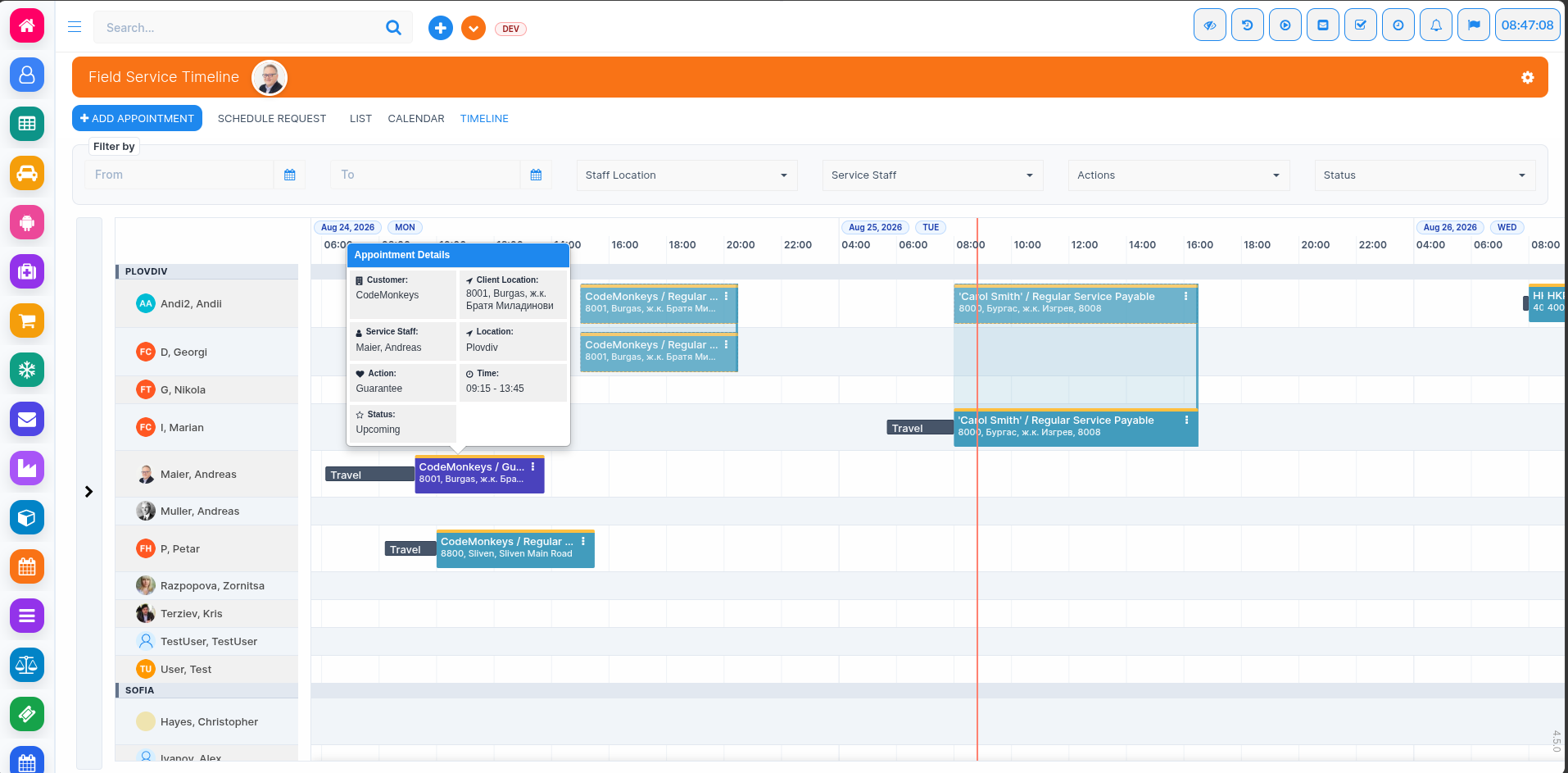
One point of entry for every service request
A structured process begins with consistent service intake.
Customer requests may arrive through telephone calls, emails, online forms, customer portals, connected equipment or planned maintenance schedules. Regardless of the source, each request should become a structured service record.
SIX ServiceFlow can capture:
- The customer and service location
- The affected machine, vehicle or customer asset
- Manufacturer, product family, model and serial number
- Reported problem and fault description
- Photos, documents and error codes
- Operational urgency and business impact
- Warranty and service-contract status
- Required response time
- Preferred appointment period
- Safety or access requirements
- Contact persons at the service location
This information gives dispatchers and technicians a clear starting point. It also prevents the same details from being requested repeatedly from the customer.
A structured request can be classified according to urgency, SLA conditions, warranty coverage, asset criticality and the type of work required. The company can therefore prioritize a production-stopping failure over a routine inspection while still ensuring that planned maintenance is not forgotten.
Competence management: finding the right person, not simply an available person
Availability alone does not make a technician suitable for a service job.
A company must be able to answer a much more important question:
Which of our employees is qualified and authorized to service this specific machine, from this manufacturer, and perform the required type of work?
SIX ServiceFlow connects field-service planning with structured competence management. Every technician can have a digital competence profile covering technical abilities, product knowledge, certifications, experience and authorizations.
Competences can be organized through a detailed hierarchy:
Manufacturer → Product family → Machine model → Component → Service operation
For example, a technician may be qualified to perform regular mechanical maintenance on a specific machine but may not be authorised to repair its electrical control system. Another technician may understand the brand but lack the safety certification required to work with high-voltage equipment.
A structured competence profile can include:
- Supported manufacturers and brands
- Product families and individual machine models
- Mechanical, electrical, hydraulic, pneumatic and software skills
- Installation and commissioning abilities
- Inspection, maintenance, diagnosis and repair capabilities
- Experience with specific faults or components
- Safety qualifications
- Legal and professional licenses
- Manufacturer authorizations
- Language skills
- Customer-specific approvals
- Regional or site-access permissions
- Training and assessment history
- Certification validity and expiry dates
Competence levels can range from basic knowledge to independent performance, advanced diagnosis and expert-level authority. The system can also distinguish between self-declared skills, manager-verified abilities, completed training and certificate-backed qualifications.
This allows SIX ServiceFlow to identify the employees who are genuinely suitable for the assignment.
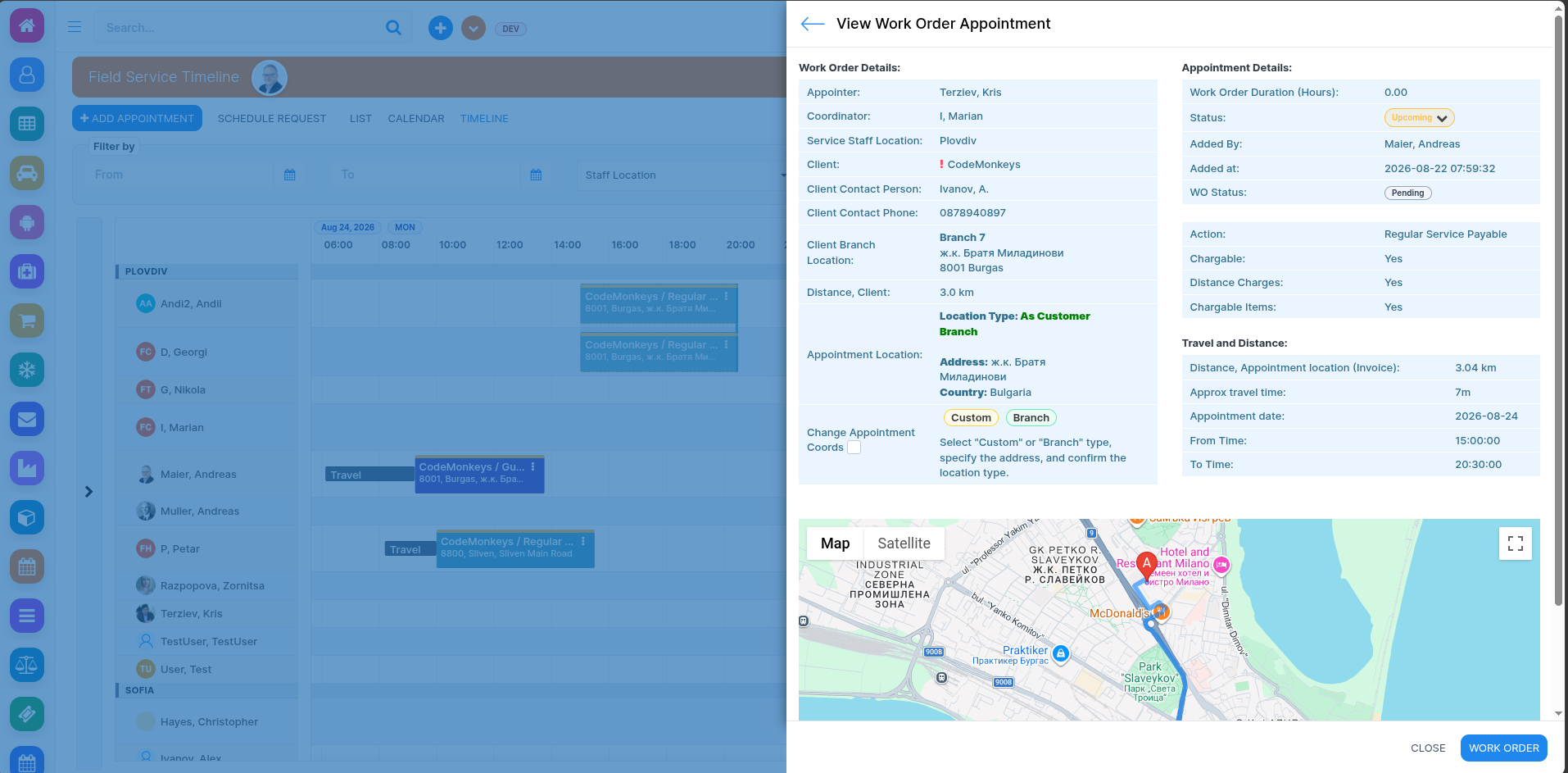
Compliance must be part of the assignment decision
Compliance should not be checked after the service job. It should influence whether the job can be assigned in the first place.
Certain activities may require valid safety training, electrical qualifications, manufacturer approval, medical clearance, site-specific instruction or another formal authorization. If a mandatory qualification has expired, the technician should not be recommended for the work.
SIX ServiceFlow can treat these requirements as firm assignment conditions.
Before a technician is dispatched, the system can verify:
- Whether mandatory certificates are valid
- Whether the employee is authorized for the machine and task
- Whether required safety instructions have been completed
- Whether the technician is approved to enter the customer’s site
- Whether the service falls within warranty or contract conditions
- Whether inspection checklists and legal documentation are available
- Whether data-access permissions are appropriate
- Whether working-time and organizational rules are respected
Certificates and supporting documents can be stored with issue dates, expiry dates and renewal requirements. Automated notifications can warn the employee and manager before a qualification expires.
This helps prevent unauthorized work and creates evidence for internal reviews, customer audits, quality-management processes and regulatory inspections.
Compliance also continues during field execution. Mandatory checklists can require technicians to document safety checks, readings, replaced parts, photographs and customer approval before the job can be completed.
Instead of relying on memory, the organization can demonstrate exactly who performed the work, under which qualification, according to which procedure and with what result.
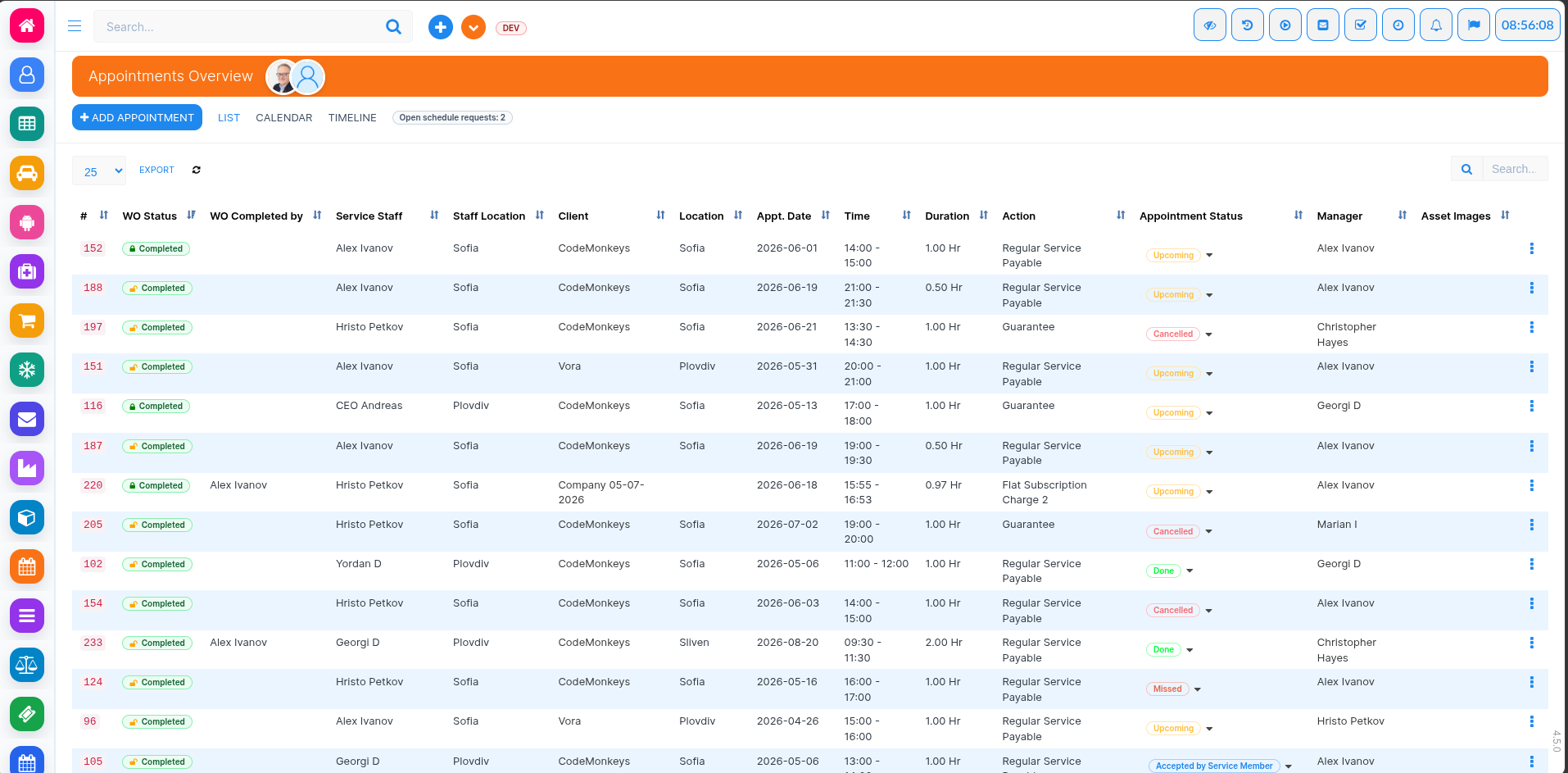
Automated scheduling turns complex requirements into practical plans
Field-service scheduling involves much more than placing appointments on a calendar.
Each service job may have different requirements:
- A particular technical competence
- A manufacturer-specific authorization
- A defined response deadline
- A customer-preferred appointment window
- A required duration
- Specific spare parts or tools
- One or more technicians
- Travel and access restrictions
- A priority based on asset criticality
- Dependencies on other service activities
SIX ServiceFlow can compare these requirements with technician availability, competence, current location, working hours, scheduled appointments, travel distance and workload.
The system can then recommend the strongest assignment or produce an optimized schedule.
A suitable technician might not be the person geographically closest to the customer. The closest employee may lack the necessary qualification. The most experienced specialist may already be committed to a higher-priority incident. Another technician may be slightly farther away but carry the required spare part in a mobile warehouse.
Structured scheduling considers the complete operational context.
AutomationAutomation uses software or equipment to carry out tasks according to defined rules. An ERP system can automate routine business steps and highlight exceptions for review. can also help reduce unnecessary travel, improve route planning, group nearby appointments and protect sufficient time for urgent work. When a cancellation, emergency or delay occurs, affected appointments can be identified and rescheduled more quickly.
The result is a plan that is realistic, competence-aware and responsive to change.
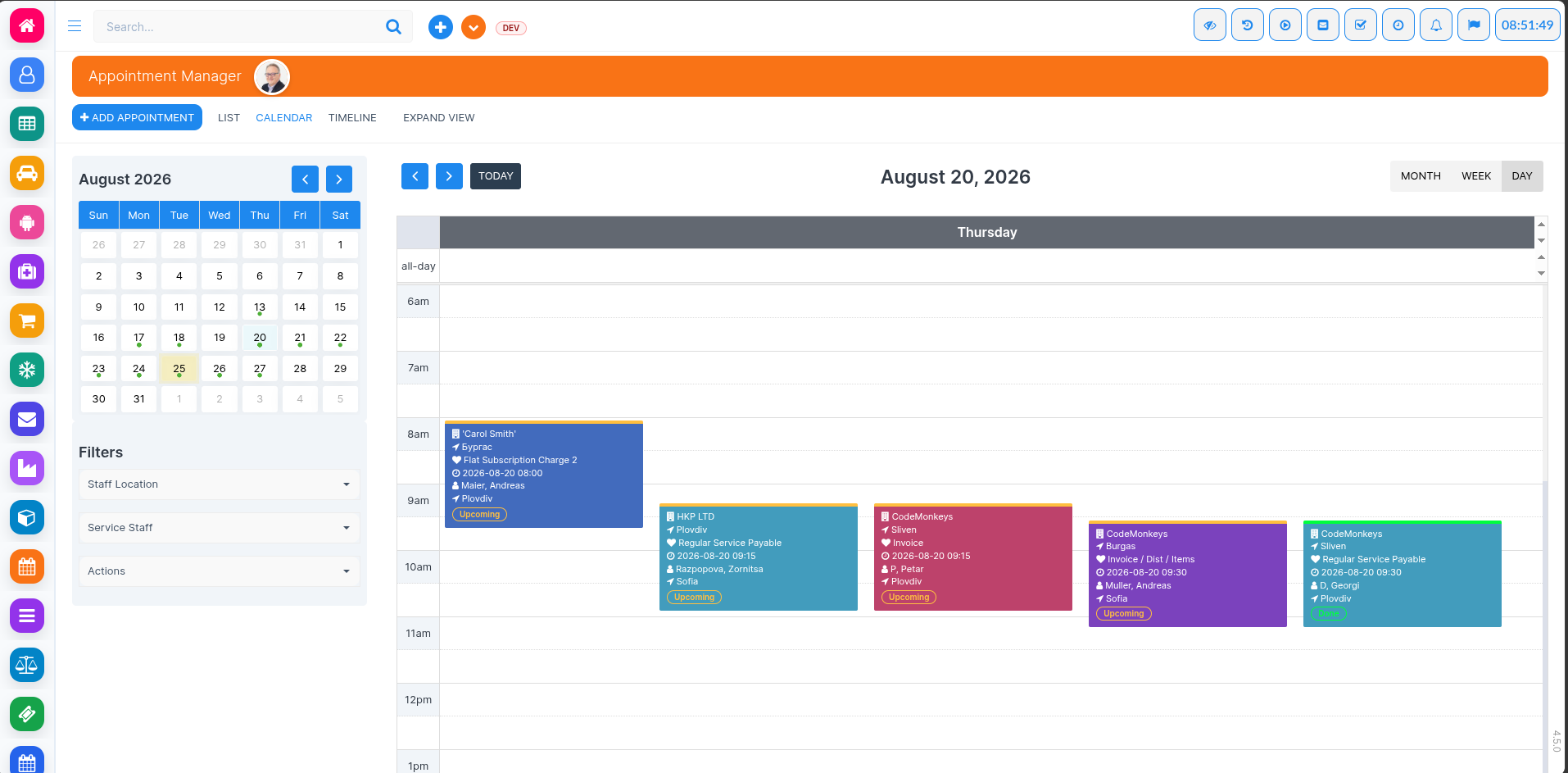
The dispatcher remains at the centre of service coordination
Automated scheduling does not remove the dispatcher. It gives the dispatcher better information.
Dispatchers understand customer expectations, operational pressures and exceptional situations that may not be fully represented by an algorithm. They may know that a customer prefers a particular technician, that a production line can only be stopped during a specific period or that two service cases should be handled during the same visit.
SIX ServiceFlow supports dispatchers with recommendations while keeping them in control.
From one planning environment, the dispatcher can:
- Review new and unassigned service requests
- See technician calendars and current workload
- Filter employees by competence and certification
- Compare distance and estimated arrival times
- Check SLA deadlines and job priorities
- Verify parts, tools and vehicle requirements
- Assign or reassign technicians
- Communicate changes to the mobile team
- Monitor job acceptance and progress
- Respond to delays and emergencies
- Escalate unresolved incidents
- Arrange follow-up appointments
This combination of automation and human judgement is important. The system handles complexity and provides reliable recommendations. The dispatcher evaluates the wider situation and makes the operational decision.
Complete mobile execution in the field
A good plan is valuable only if the technician can execute it properly.
With SIX ServiceFlow, the mobile field-service process begins before the technician arrives at the customer’s location. The technician can receive the appointment, review the reported problem and prepare the required parts, tools and instructions.
The mobile service record can provide access to:
- Customer and location details
- Asset and serial-number information
- Previous service history
- Known faults and earlier repairs
- Manuals and technical documents
- Service-contract and warranty information
- Required checklists
- Planned tasks and expected duration
- Reserved spare parts
- Safety and access instructions
- Customer contact details
During the visit, the technician can record arrival, working time, travel time, diagnosis, actions performed, measurements, photographs, notes and parts consumed.
If additional work is identified, it can be documented immediately. Required approval can be obtained before the extra work begins. The technician can also create follow-up recommendations or report that another specialist, tool or replacement part is needed.
Once the work is complete, the customer can review the service report and confirm it with a digital signature.
This removes unnecessary paperwork and reduces the need to enter the same information again after returning to the office.
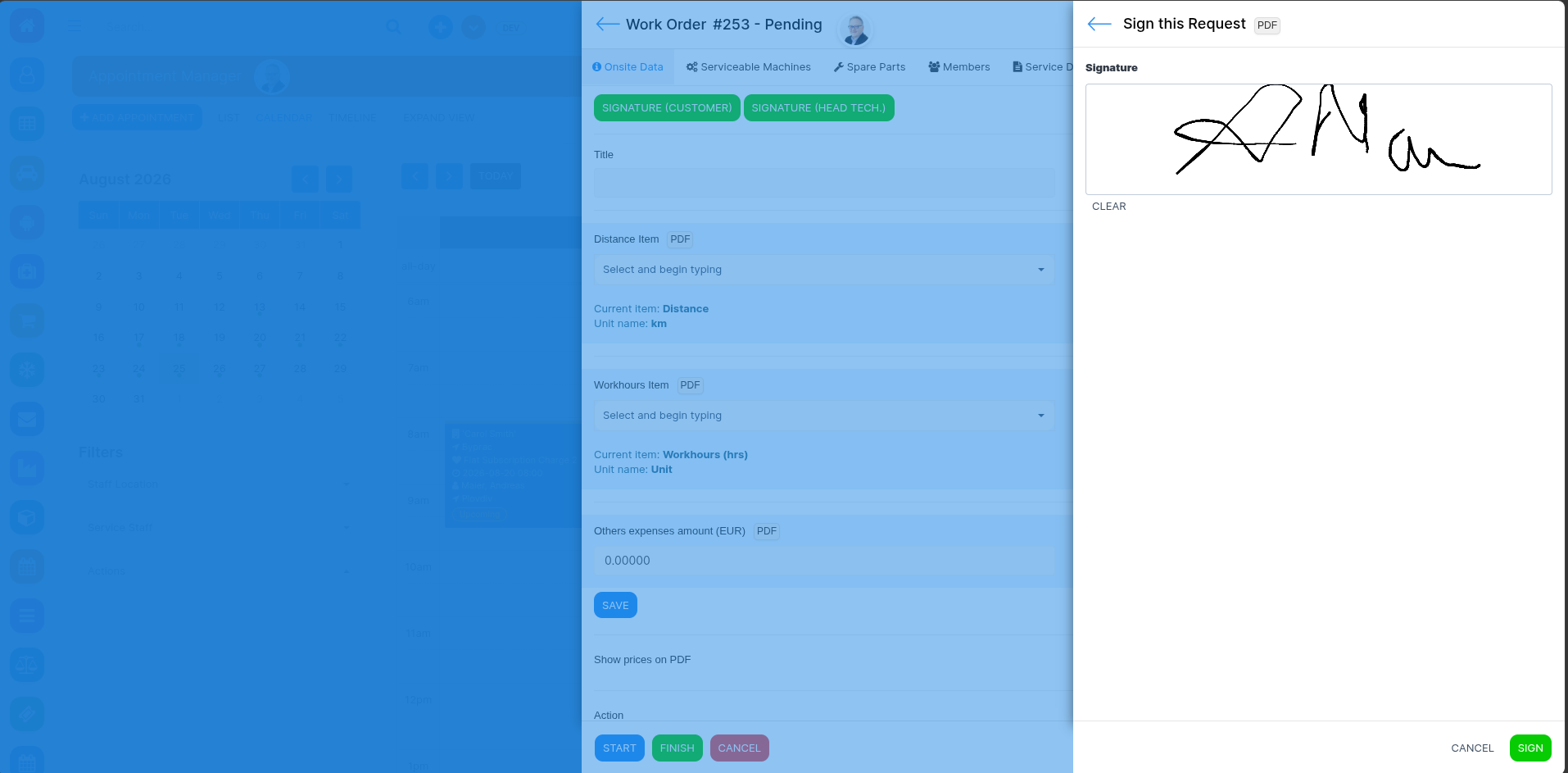
Connecting service jobs with spare parts and inventory
A common cause of failed service visits is not a lack of technical ability but a lack of the correct part.
SIX ServiceFlow can connect service planning with SIX Inventory, Warehousing and Purchasing. The dispatcher and technician can see whether required components are available in a central warehouse, regional location, service vehicle or technician’s mobile stock.
Parts can be reserved for an appointment before the technician departs. When a component is used, inventory is updated automatically and the cost is linked to the service job.
If mobile stock falls below the defined level, the system can create a replenishment requirement. If a part is unavailable, the purchasing process can be triggered, or the appointment can be scheduled for a realistic date based on expected delivery.
This creates an uninterrupted flow:
Required part → Availability check → Reservation → Technician issue → Consumption → Replenishment
The company gains better stock accuracy, fewer unnecessary journeys and clearer visibility into the real cost of service delivery.
From completed service job to business result
Field service does not end when the technician closes the toolbox.
The completed service record contains commercially important information. It may include labour time, travel, spare parts, external costs, warranty status, customer approval and additional recommendations.
SIX ServiceFlow can transfer this information into the relevant business processes.
Depending on the service case, completion can trigger:
- A service report
- Customer confirmation
- Invoice preparation
- Warranty documentation
- Contract consumption
- Expense allocation
- Stock movements
- Technician time records
- Follow-up tasks
- A quotation for recommended work
- Preventive-maintenance planning
- Customer satisfaction feedback
Because SIX ServiceFlow forms part of the wider SIX ERPAn ERP system connects a company’s core processes—such as sales, finance, inventory, manufacturing, and service—in one place so teams can work with shared information. environment, service information does not remain isolated in a separate application. It can connect with CRM, customer assets, inventory, purchasing, sales, contracts, finance and business intelligence.
The result is one continuous process from the customer’s first request to the final commercial outcome.
Better customer communication throughout the service journey
Customers usually do not see the complexity behind a service appointment. They experience whether the company responds quickly, communicates clearly and solves the problem.
A structured service process makes that experience more reliable.
Customers can receive confirmations when:
- The request has been registered
- An appointment has been scheduled
- A technician has been assigned
- The technician is travelling
- The arrival time changes
- Additional approval is required
- The work has been completed
- A service report or invoice is available
This reduces uncertainty and avoids repeated telephone calls asking for an update.
The technician also arrives better informed. Instead of asking the customer to explain the entire history again, the technician can see the asset, previous visits, reported symptoms and contractual conditions.
Consistent communication makes the service organization appear professional because the underlying process is professional.
Measuring service quality with reliable data
Without structured data, managers may know how many jobs were completed but not whether those jobs were completed efficiently.
SIX ServiceFlow can convert everyday service activities into measurable business intelligence.
Management can analyze:
- Response and arrival times
- SLA compliance
- First-time-fix rate
- Repeat visits
- Average job duration
- Travel time and distance
- Technician utilization
- Jobs completed by technician or team
- Competence coverage
- Certification risks
- Spare-parts consumption
- Warranty costs
- Service revenue and margin
- Customer satisfaction
- Asset failure frequency
- Planned versus emergency service
- Unresolved and escalated cases
These indicators reveal where service performance is strong and where improvement is needed.
A low first-time-fix rate may indicate insufficient diagnosis, missing parts or incorrect technician assignment. Long travel times may show that regional coverage needs improvement. Repeated failures on one asset model may justify a preventive-maintenance program or supplier discussion.
Structured data therefore supports both operational control and long-term business decisions.
Turning completed work into organizational knowledge
Every service visit creates knowledge.
The technician learns more about the customer’s equipment, the reported fault, the successful solution and the parts required. If this knowledge remains only with the technician, the company gains little long-term value from it.
SIX ServiceFlow can preserve this experience as part of the service and asset history.
Future technicians can see:
- Previous symptoms
- Diagnostic steps
- Successful and unsuccessful repairs
- Replaced components
- Measurements and photographs
- Time required
- Recommended follow-up work
- Recurring fault patterns
Completed jobs can also contribute to competence development. Repeated successful assignments may demonstrate that an employee has gained experience with a particular machine or procedure.
For critical work, competence changes should still require supervisor review, formal assessment or certification. However, the system can identify development progress and recommend the next training step.
This helps the company turn individual experience into shared organizational capability.
Identifying competence gaps before they become service failures
Competence management does more than support daily scheduling. It also helps management plan the future of the service organization.
SIX ServiceFlow can show:
- Machines that only one employee can service
- Brands without sufficient regional coverage
- Qualifications that will expire soon
- Specialists who are consistently overloaded
- Customer contracts that exceed current capabilities
- New equipment requiring additional training
- Employees ready for advanced development
- Areas where external service partners are still required
This is particularly valuable when a company introduces a new product line or signs a major service contract. Management can compare the required competences with the organization’s available capabilities before making commitments.
If a gap exists, the company can arrange training, recruitment, certification or partner support.
This reduces dependence on individual experts and creates a more resilient service organization.
Supporting continuous employee development
A structured competence model creates a clear path from learning to independent work.
An employee-development flow could include:
Required competence → Training → Supervised assignments → Practical assessment → Manager approval → Independent authorization
For example, a junior technician may complete manufacturer training, accompany a senior colleague on several visits, perform supervised repairs and pass a practical assessment. Only then is the employee approved to complete the work independently.
This process gives employees transparent development goals and gives managers objective evidence for advancement decisions.
Training is no longer disconnected from operational demand. It can be prioritized according to the machines customers own, the contracts the company must fulfil, and the competence gaps identified by the system.
The business benefits of structured field service
The greatest value of structured service management is not one isolated feature. It is the connection between every operational step.
A complete process provides:
- Faster and more reliable service response
- Better technician-to-job matching
- Improved first-time-fix rates
- Fewer unnecessary visits
- Lower travel and coordination costs
- Better spare-parts availability
- Stronger compliance control
- Clearer customer communication
- More accurate service reports
- Faster and more complete invoicing
- Better employee development
- Reduced dependence on personal knowledge
- Greater SLA transparency
- Measurable service quality
- More accurate profitability analysis
For customers, this means faster support and more dependable service.
For technicians, it means better information, clearer assignments and fewer avoidable problems.
For dispatchers, it means stronger planning support and immediate operational visibility.
For managers, it means a service organization that can be measured, improved and scaled.
SIX ServiceFlow: one connected journey from request to result
SIX ServiceFlow transforms field service from a collection of separate activities into a controlled business process.
It connects the customer request with the serviced asset. It connects the required work with the right employee competencies. It combines automated scheduling with experienced dispatcher control. It supports technicians through complete mobile field execution. It links consumed parts with inventory and purchasing. Finally, it turns completed work into service documentation, financial results and management intelligence.
The objective is not merely to send someone to the customer.
The objective is to send the right person, with the right qualifications, information and resources, at the right time—and to make every completed service job valuable to the customer and the business.
Make every service visit count
With SIX ServiceFlow, field operations become structured, transparent and connected. From intelligent planning and competence-based assignment to compliant execution, customer confirmation and financial completion, every step contributes to better service and stronger business performance.
Plan intelligently. Dispatch confidently. Execute completely. Improve continuously.